KSMC

Global Pulse

Global Pulse

Global Deal Activity Plunges in Early 2026

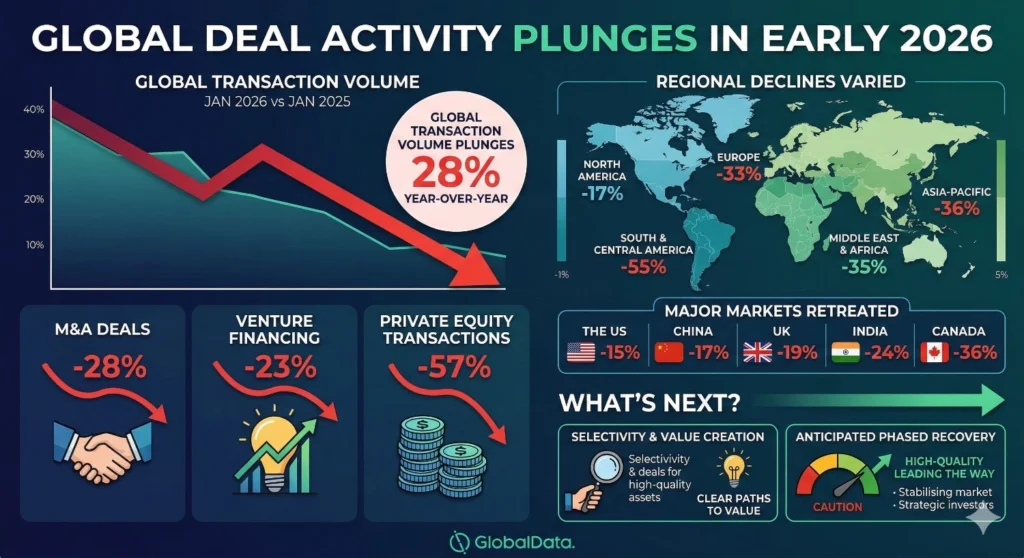
The Global dealmaking stumbled in January 2026, with transaction volumes plummeting 28% year-over-year as investors shifted from aggressive expansion to capital preservation amid ongoing macro and geopolitical uncertainty, according to GlobalData. The downturn was broad-based: M&A deals fell 28%, venture financing dropped 23%, and private equity transactions tumbled 57%. Regional declines varied, with North America proving most resilient at -17%, while other regions saw steeper drops—Europe (-33%), Asia-Pacific (-36%), Middle East and Africa (-35%), and South and Central America (-55%). Major markets all retreated: the US (-15%), China (-17%), UK (-19%), India (-24%), and Canada (-36%) all recorded significant volume declines. What’s Next?: Dealmakers are prioritizing selectivity and clearer paths to value creation over volume-driven strategies. Despite the current caution, analysts anticipate a phased recovery led by high-quality assets as financing markets stabilize and strategic investors reassess portfolios.

Global Pulse

What’s Behind the Declining Dollar?

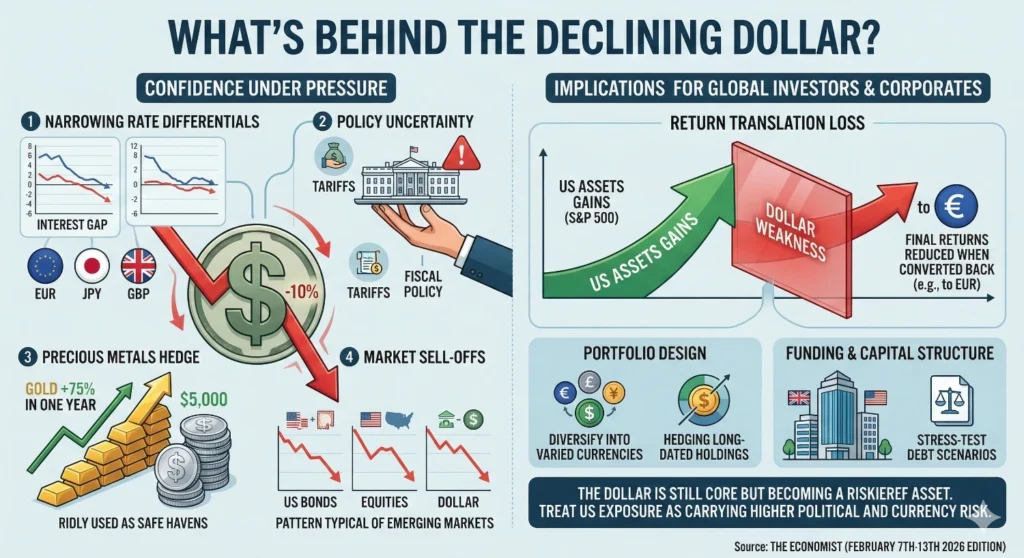
The US dollar is still the world’s main reserve currency, but it has become weaker and more volatile over the past year. That matters for anyone holding US assets from outside the US. Since January 2025 it has fallen by about 10% against a broad basket of currencies, even though US growth and equity markets look strong. For foreign investors, this means a large part of the S&P 500’s 14% gain in dollar terms has been offset once returns are converted back into their home currency. Why the dollar is under pressure? Several factors are undermining confidence in the dollar, even though US growth and US equity markets still look strong.​​ The nomination of Kevin Warsh as the next Fed chair gave brief relief, because of his earlier hawkish reputation. But his current call for rate cuts, even with current inflation (2.8%) still above target (2%) and further fiscal stimulus coming, could add to concerns that US policy will weaken the currency over time. Even after its recent decline, the dollar is still overvalued on most measures. At the same time, foreign investors have limited alternatives as the dollar still dominates global trade invoicing, cross‑border banking, international debt and FX transactions. Practical implications for Global Investors and Corporates In short, the dollar is still the core funding and reserve currency, but it is becoming a riskier asset. Anyone managing capital across borders should treat US exposure as carrying higher political and currency risk than in the pre‑2020 period and adjust pricing, hedging and governance expectations accordingly. Source: The Economist (February 7th-13th 2026 edition)

Global Pulse

Energy, Utilities, and Mining Lead 2025 M&A Activity

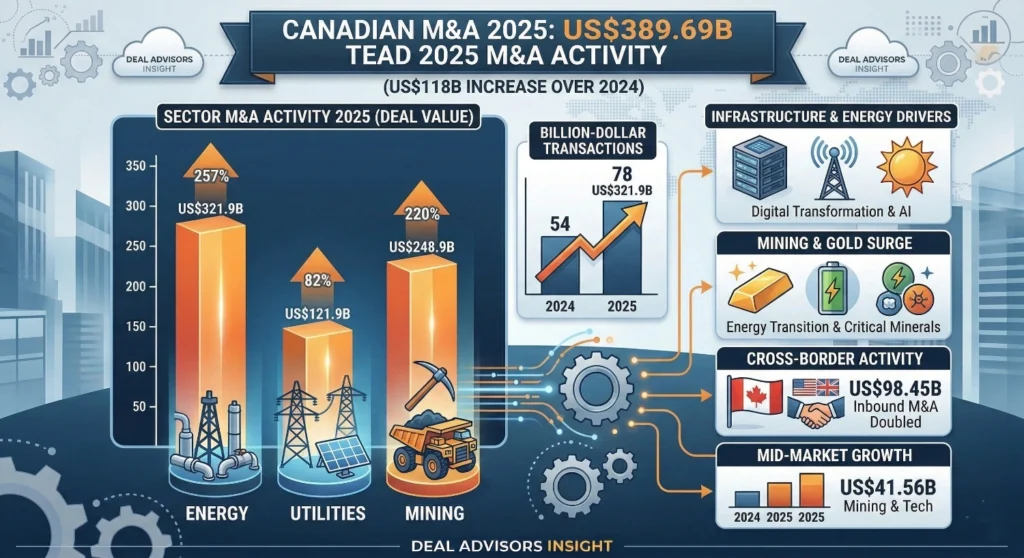
The Canadian M&A market closed 2025 with exceptional strength, posting US$389.69 billion in total deal value—a US$118 billion increase over 2024. The story was megadeals over volume, with billion-dollar transactions accounting for US$321.9 billion and 78 deals compared to 54 in 2024. Energy, utilities, and mining dominated with US$195.48 billion—over half of total Canadian M&A. Utilities deals rose 82% year-over-year, energy jumped 257%, and mining increased 220%, reflecting intense demand for infrastructure supporting digital transformation and AI. Key Sector Highlights Challenges And Evolution Dealmakers navigate heightened regulatory scrutiny under amended Investment Canada Act provisions, tariff uncertainty, and geopolitical volatility through sophisticated structuring and new risk protections. Private credit has become a permanent M&A financing fixture, with hybrid structures—senior bank facilities plus private credit mezzanine—now standard in mid-market transactions. This evolution provides flexibility beyond traditional bank constraints and will continue driving 2026 activity as rates improve. Read the full article here.

Global Pulse

The ‘Frenemy’ Pact of the Decade: How Google Gemini Will Supersize Siri

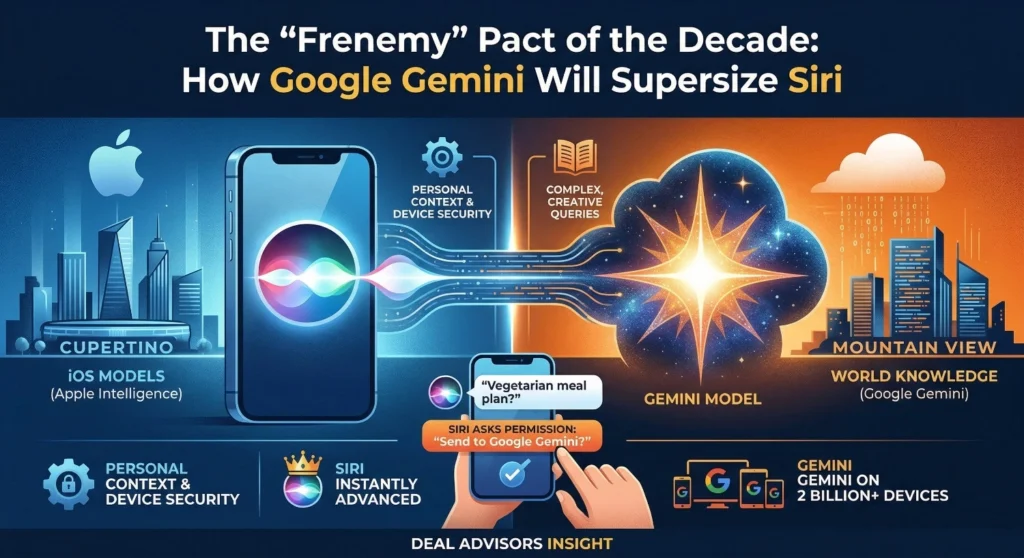
For nearly two decades, Apple and Google have fought a bitter war for supremacy in mobile technology. But the immense pressure of the Generative AI arms race has forced an unthinkable truce. In a move that has fundamentally reshaped the mobile landscape, Apple has announced a partnership with Google to integrate the powerful Gemini model into iOS, macOS, and iPadOS, finally giving Siri the “brain transplant” it desperately needed. The Two Tier ‘Brain’ Coming To Your iPhone Why This Matters? The Bottom Line The smartphone landscape continues to evolve rapidly as the AI era takes hold. In this new reality, even the fiercest rivals have realized that collaboration may be the best way to keep pace with rapid technological change. Your iPhone is still designed in Cupertino, but its best new ideas will soon be powered by Mountain View.

Global Pulse

2026 Investment Outlook: An Year Demanding Active Decision-Making

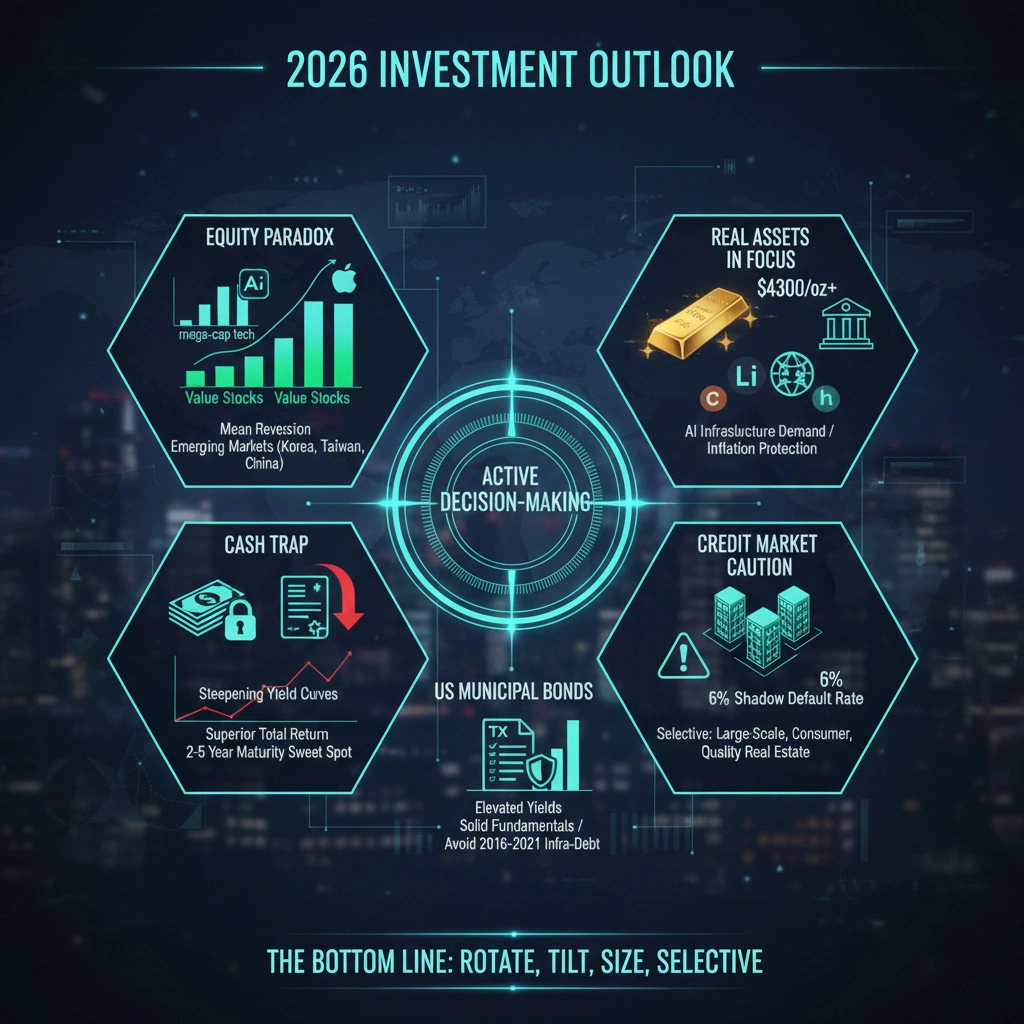
As markets close out 2025 near record highs, the path forward demands selectivity. We cover actionable takeaways accross various asset classes below. The Equity Paradox U.S. equities trade at historical valuation extremes, concentrated in mega-cap tech stocks increasingly funding AI infrastructure through circular debt arrangements. Yet value stocks remain attractively priced versus historical averages, suggesting mean reversion potential as Fed rate cuts support broader growth. Emerging markets like Korea, Taiwan, and China offer tech exposure at compelling discounts. The Cash Trap Money market assets remain elevated despite declining yields as the Fed cuts rates. With yield curves steepening, bonds offer superior total return potential. The 2-5 year maturity sweet spot provides attractive income with capital appreciation upside, while global diversification across UK, Australia, and select emerging markets enhances risk-adjusted returns. Real Assets in Focus Gold has surged past $4,300/oz as central banks accumulate reserves faster than Treasuries, driven by geopolitical hedging and dollar diversification following the 2022 Russian asset seizure. While momentum has pushed prices beyond fundamentals, structural support remains intact. Broad commodity allocations capture AI infrastructure demand for copper, lithium, and energy while providing inflation protection. Credit Market Caution Despite tight credit spreads, stress signals are emerging in private lending markets. Investment funds focused on corporate loans are trading at 10% discounts to their underlying asset values, while struggling borrowers increasingly pay debt with more debt—pushing US shadow default rates to 6% from 2% in 2021. Opportunities remain in large-scale financings, consumer credit, and quality real estate lending. US Municipal Bond Opportunity US municipal bonds offer strong value for taxpayers, combining elevated yields with solid fundamentals backed by healthy state and local government balance sheets. These tax-advantaged bonds are positioned as top risk-adjusted opportunities for 2026. However, selectivity matters: avoid over-leveraged infrastructure projects from 2016-2021, and instead target private placement bonds offering investment-grade quality at attractive yields. The Bottom Line 2026 is expected to reward active management over passive positioning. Rotate from cash to quality bonds, tilt toward undervalued equities, size real assets carefully, and stay selective in credit.

Global Pulse

Will 2026 Deliver the Biggest M&A Deal Ever?

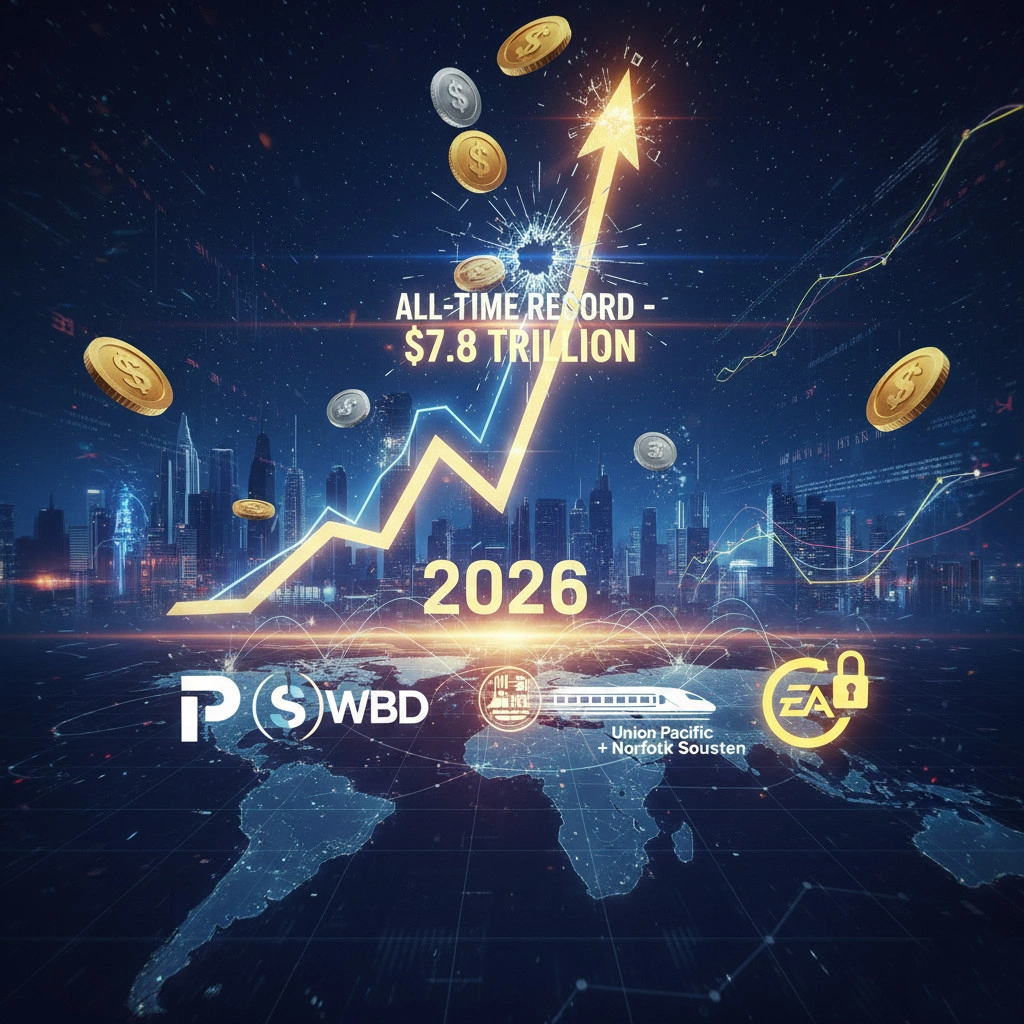
While the number of mergers and acquisitions has slowed in 2025, the size of headline transactions is skyrocketing, and 2026 could be the year mega‑deals break records. Global M&A activity reached about $4 trillion by November 2025 — more than 40% higher than last year’s pace, despite fewer deals overall. Some blockbuster transactions have already made headlines: What’s fueling the boom? Dealmakers point to a mix of: Regulatory hurdles remain — antitrust scrutiny and trade policies could influence outcomes — but analysts are already predicting record-breaking transactions in 2026. Forecasts suggest global M&A volume could climb toward $7.8 trillion by 2027, and Breakingviews hints at mega-consolidations across tech, telecom, and financial services. If Reuters’ take is anything to go by, the next year could deliver a deal that rewrites the M&A record books. But, as always in the world of mega-deals, only time will tell if this becomes a reality.

Global Pulse

Cybersecurity M&A Heats Up as Giants Strengthen AI Capabilities

November 2025 saw significant consolidation in the cybersecurity sector, with major players making strategic acquisitions to bolster their AI-powered security offerings. Key Deals: What’s Driving Activity The convergence of AI and cybersecurity is creating urgency among strategic acquirers. Companies need AI-native security solutions to defend against increasingly sophisticated threats. Mid-Market Impact For mid-market cybersecurity firms, the message is clear: AI capabilities are now table stakes for attracting strategic interest. Companies with proprietary AI/ML models for threat detection command premium valuations. Read the full roundup at Infosecurity Magazine.

Global Pulse

Leading Trends in Global M&A 2025

The global M&A market is rebounding with deal value up 10% in the first nine months of 2025. Megadeals are returning—27 transactions over $10 billion closed, up from 21 last year. North America leads with 62% of global activity, while technology, industrials, and energy sectors show the strongest momentum. Standout deals include: What’s Driving Success Smart dealmakers are turning uncertainty into opportunity with four key strategies: The Bottom Line With $2 trillion in private equity dry powder, stabilizing rates, and recovering valuations, conditions are improving. The opportunity is clear: make bold, selective moves now to transform your business for lasting advantage. Access the BCG M&A Report here.

Global Pulse

Global Datacenter Boom Fueled By Investment And Rising Debt

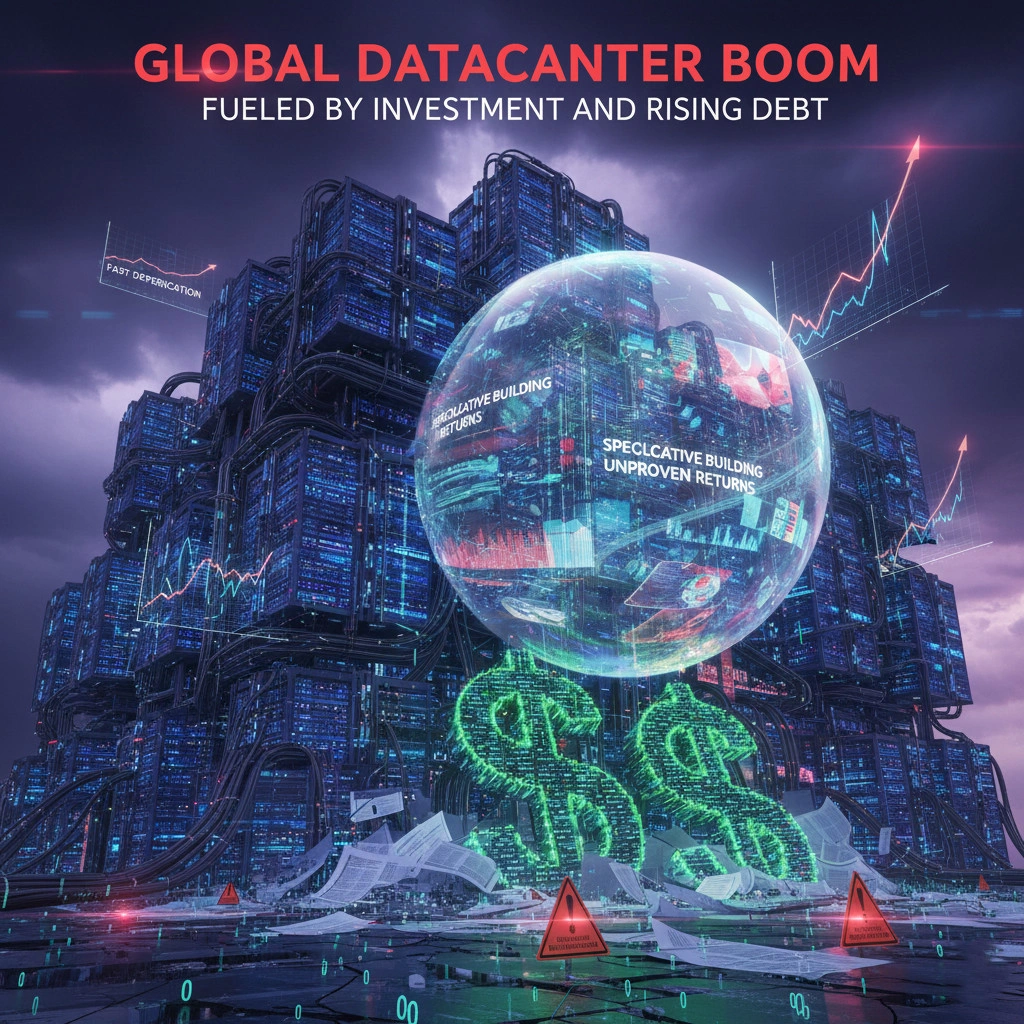
The global AI boom is driving an unprecedented infrastructure buildout, with nearly $3 trillion expected to be spent on datacenters by 2028. But as investments surge, so do questions about whether this massive spending spree is sustainable—or a bubble waiting to burst. The Numbers Are Staggering Tech giants Amazon, Meta, Google, and Microsoft are expected to spend over $750 billion on AI-related capital expenditure over the next two years. Morgan Stanley estimates global datacenter spending will hit nearly $3 trillion through 2028, with only $1.4 trillion covered by big tech’s cashflow—leaving a $1.5 trillion funding gap that must be filled by private credit and other financing sources. This comes as AI companies reach eye-watering valuations: Nvidia became the world’s first $5 trillion company, while OpenAI is valued at $500 billion and could pursue a $1 trillion IPO next year. The Risks Are Real Several warning signs are emerging: The Reality Check The Uptime Institute, which inspects datacenters, cautions that many announced projects “will never be built, or will be built and populated only partially, or gradually, over a decade.” There are already 11,000 datacenters globally—up 500% in 20 years—with an estimated 10GW of new capacity expected to start construction this year. Tech companies are betting that generative AI revenues will explode from $45 billion in 2024 to $1 trillion by 2028. Whether businesses and consumers will actually pay enough for AI services to justify these investments remains the trillion-dollar question. Read more here.

Global Pulse

Europe’s OpenAI Rival Raises €1.7B ($2B), Hits €11.7B ($13.8B) Valuation

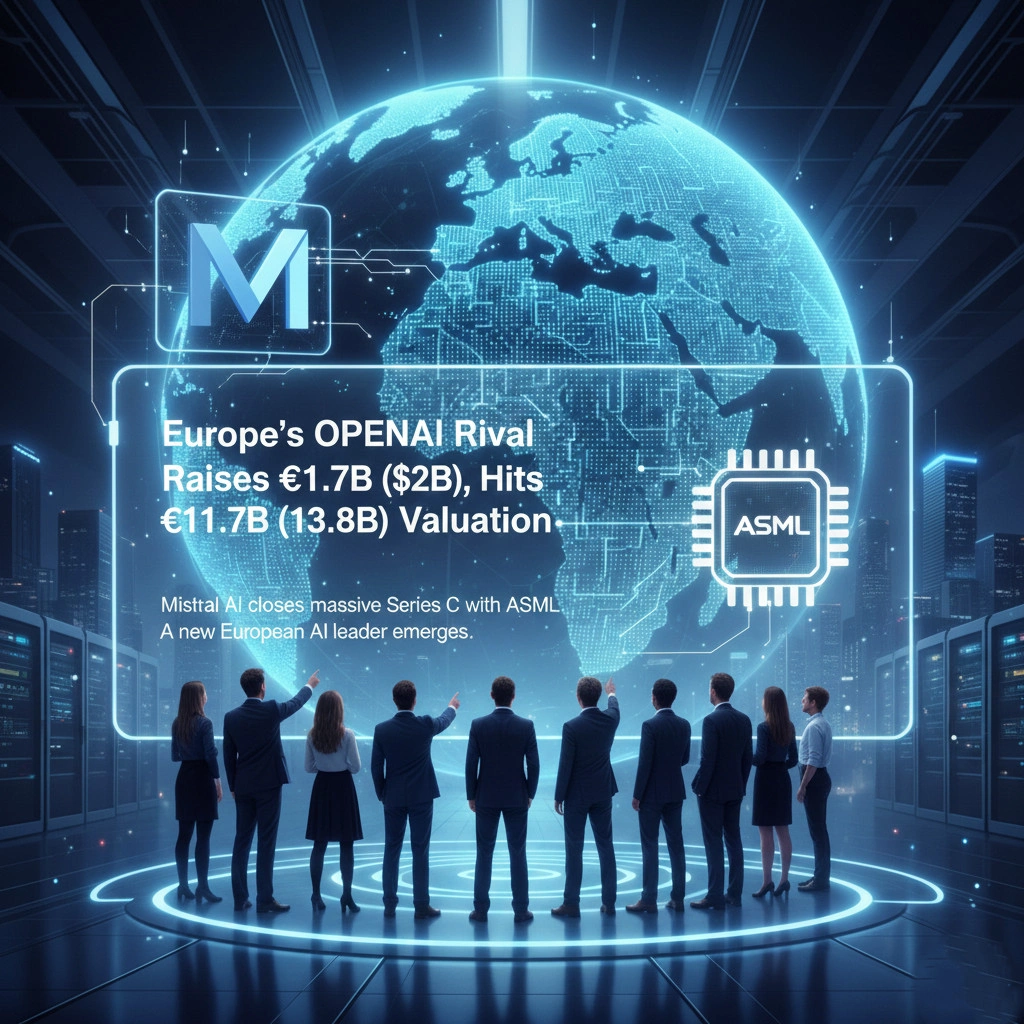
French AI startup Mistral AI just closed a massive €1.7 billion ($2 billion) Series C led by Dutch chip giant ASML, doubling its valuation from €6 billion ($7.1 billion) to €11.7 billion ($13.8 billion) in just over a year. ASML invested €1.3 billion ($1.5 billion) for an 11% stake and will integrate Mistral’s AI across its semiconductor operations—a move that could accelerate AI adoption throughout the chip supply chain. Mistral launched Europe’s first AI reasoning model this summer, joining the competitive landscape alongside US and Chinese players like DeepSeek. Unlike English-centric models, it’s built for European languages—a strategic advantage that enhances the continent’s AI capabilities and offers alternatives to existing solutions. This represents the emergence of regional AI ecosystems that can complement global offerings with specialized local expertise.

Scroll to Top