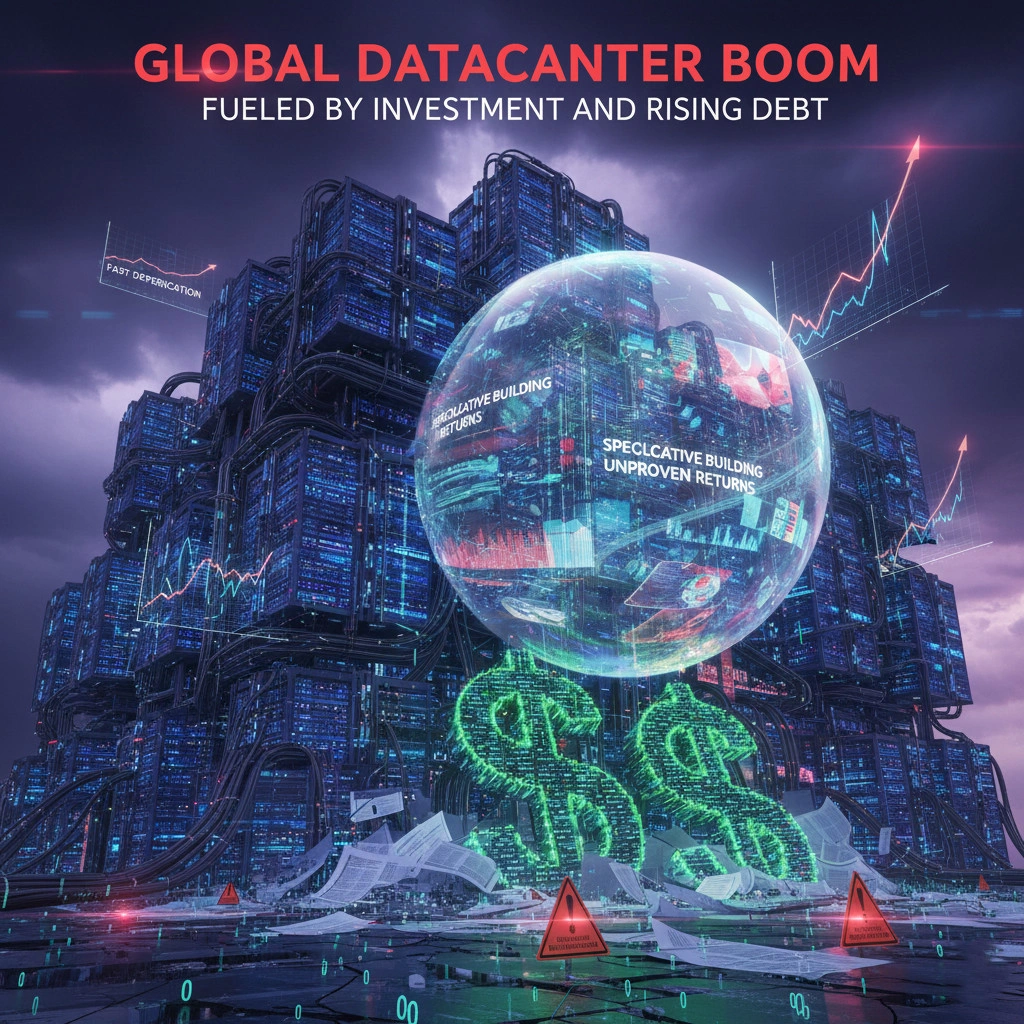
The global AI boom is driving an unprecedented infrastructure buildout, with nearly $3 trillion expected to be spent on datacenters by 2028. But as investments surge, so do questions about whether this massive spending spree is sustainable—or a bubble waiting to burst.
The Numbers Are Staggering
Tech giants Amazon, Meta, Google, and Microsoft are expected to spend over $750 billion on AI-related capital expenditure over the next two years. Morgan Stanley estimates global datacenter spending will hit nearly $3 trillion through 2028, with only $1.4 trillion covered by big tech’s cashflow—leaving a $1.5 trillion funding gap that must be filled by private credit and other financing sources.
This comes as AI companies reach eye-watering valuations: Nvidia became the world’s first $5 trillion company, while OpenAI is valued at $500 billion and could pursue a $1 trillion IPO next year.
The Risks Are Real
Several warning signs are emerging:
- Speculative building: Alibaba’s chair warned in March about datacenters being built without customer commitments, calling it “the beginning of some kind of bubble”.
- Private debt concerns: Meta has tapped $29 billion in private credit for datacenter expansion, raising alarms at institutions like the Bank of England about shadow banking risks.
- Unproven returns: MIT research showed 95% of organizations are getting zero return from generative AI pilots so far.
- Fast depreciation: Some analysts warn datacenters will depreciate twice as fast as the revenue they generate.
The Reality Check
The Uptime Institute, which inspects datacenters, cautions that many announced projects “will never be built, or will be built and populated only partially, or gradually, over a decade.” There are already 11,000 datacenters globally—up 500% in 20 years—with an estimated 10GW of new capacity expected to start construction this year.
Tech companies are betting that generative AI revenues will explode from $45 billion in 2024 to $1 trillion by 2028. Whether businesses and consumers will actually pay enough for AI services to justify these investments remains the trillion-dollar question.
Read more here.