KSMC

Author name: admin

Global Pulse

Perplexity AI Makes Stunning $34.5B Bid for Google Chrome Browser

AI search company Perplexity has submitted an unsolicited $34.5 billion offer to purchase Google’s Chrome browser, a bold move that comes as Google faces anti-trust pressure following last year’s landmark ruling. The Numbers Why Now?: The Department of Justice has proposed forcing Google to sell Chrome as an anti-trust remedy, though Google plans to appeal. Perplexity’s bid positions the AI startup to capitalize on regulatory pressure against Big Tech. The Bigger Picture: Perplexity launched its own browser “Comet” in July, while OpenAI is reportedly developing one too. The three-year-old startup has also bid for TikTok and been courted by Meta and Apple. While Perplexity’s bid is considered a long shot given Google’s resistance, it signals intensifying competition for web browser dominance in the AI era.

Deal Strategy

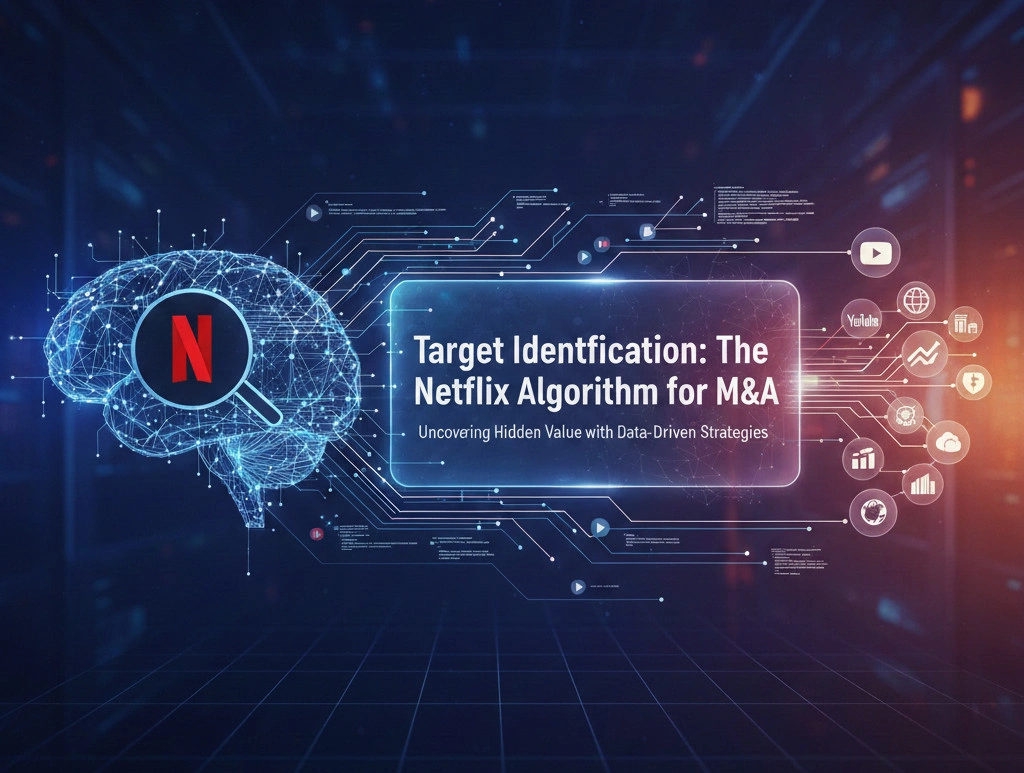
Target Identification: The Netflix Algorithm for M&A

What This Means: Target identification is the systematic process of finding potential acquisition candidates using data-driven methodologies rather than traditional industry-focused approaches. Like Netflix’s recommendation algorithm analyzes viewing patterns to suggest content, M&A algorithms analyze business patterns, market behaviors, and performance metrics. The Challenge: Traditional target screening relies on obvious criteria – same industry, similar size, geographic proximity. This approach can miss valuable opportunities. Why It Matters: The most successful acquirers use data-driven approaches to identify targets before they’re obvious, creating competitive advantages and better valuations. Real Deal Example: Google’s 2006 acquisition of YouTube for $1.65 billion seemed overpriced for a two-year-old startup losing money. But Google’s data analytics had identified something others missed – user engagement metrics showed YouTube users spent significantly more time on the platform than on traditional video sites. YouTube’s continued explosive growth is evident in 2025: $8.93 billion in Q1 2025 (up 10.3% year-over-year) and $9.8 billion in Q2 2025 (up 13% year-over-year), putting the platform on track for over $37 billion in annual ad revenue for 2025 alone. Key Insight: Using behavioral data alongside conventional financial metrics to identify target potential.

AI Tools Spotlight

Claude AI’s New App Integrations Make Workflow Smarter and Easier

Anthropic’s AI assistant Claude has taken a big step forward with seamless integration into popular apps like Notion, Canva, Stripe, Figma, Socket, and Prisma. Users no longer need to repeatedly explain their tasks or copy-paste information—Claude can now access relevant app data directly to provide smarter, context-aware assistance. This upgrade boosts productivity by streamlining workflows and reducing repetitive explanations. Paid Claude users can explore the growing directory of app connections, unlocking more efficient and collaborative AI support than ever before. Explore Claude here.

Global Pulse

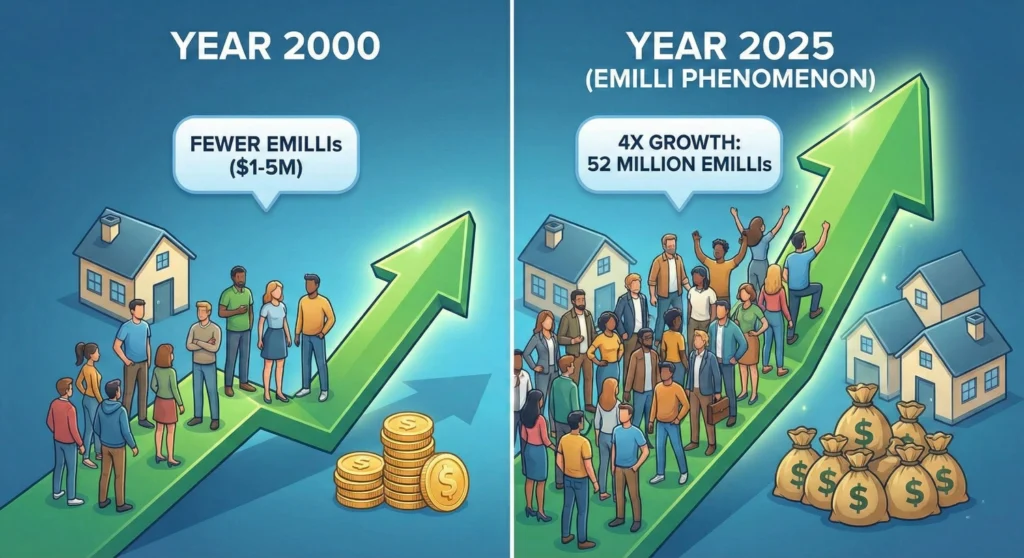
The Rise of the Everyday Millionaire: The EMILLI Phenomenon

A quiet but powerful shift is underway in global wealth. According to the UBS Global Wealth Report 2025, the number of “Everyday Millionaires” (EMILLIs)—those with $1–5 million in assets—has more than quadrupled since 2000, reaching 52 million people worldwide. Further, this segment now controls wealth exceeding $107 trillion—over 2.5 times their aggregate wealth (in real terms) at the turn of the millennium. This nearly matches the $119 trillion owned by individuals with assets above $5 million. What’s Driving the Surge? The main factors are strong real estate appreciation and rising financial markets, especially in the U.S. and Europe. Currency movements and inheritance also play a part, with millions moving into millionaire status almost invisibly. Implications for the Future The continued expansion of the EMILLI segment signals a structural change in global wealth distribution. The “millionaire next door” is no longer an anomaly; they are fast becoming the standard in many markets. As asset values, especially property, continue to climb and financial literacy grows, the EMILLI class is set to play an even more prominent role in the global economy. For deeper insights into this and related topics, you can access the full 2025 Global Wealth Report here.

Deal Strategy

Cultural Due Diligence: Business Integration Success

What This Means: Cultural due diligence is the systematic assessment of organizational cultures, management styles, employee values, and workplace practices to determine compatibility between merging companies. In M&A deals, this often involves navigating family business dynamics, founder transitions, and preserving entrepreneurial cultures. The Challenge: Cultural integration gets insufficient attention during a middle-market transaction, yet family-owned businesses and entrepreneurial cultures are often the primary value drivers that attracted acquirers initially. Why It Matters: Cultural misalignment is one of the leading causes of M&A value destruction in deals, yet it’s often the most preventable cause of deal failure. Real Deal Examples: 1. Failed Integration Due to Cultural Clash A first-time CEO acquired a multi-generational industrial services business in the U.S. Southeast. The business had strong financials, loyal customers, and a history of site-level autonomy. The new owner centralized dispatch and imposed new processes, undermining the autonomy and trust that senior technicians valued. Within six months, three senior technicians with deep client knowledge left. The move, while logical on paper, broke the company’s operating DNA and led to a loss of institutional memory and customer relationships. 2. Successful Family Business Transition – Techno Diesel Techno Diesel, a Quebec-based heavy truck repair business, transitioned from its founders to four daughters, who implemented a structured governance model. The family separated business from family issues by creating a multi-level governance structure, including an executive committee, advisory committee, board of shareholders, and a family council. This allowed for open communication, gradual leadership transition, and preservation of core values. The business grew to 110 employees, diversified into new markets, and maintained family harmony, demonstrating that careful cultural planning and phased integration can drive both business and family success. Read more here. Share Your Experience: If cultural assessment resonates with challenges you’re seeing in potential deals, we’re always interested in hearing different perspectives from the field.

AI Tools Spotlight

🚀 Grammarly Acquires Superhuman: AI Productivity Power-Up!

Grammarly just acquired premium email client Superhuman to build the ultimate AI productivity suite. Superhuman CEO Rahul Vohra and 100+ employees are joining Grammarly, but don’t worry – Superhuman will continue as a product! 🛠️ What Each Tool Does Grammarly ✍️: Your AI writing assistant that fixes grammar, improves clarity, and enhances tone across all platforms. Explore Grammarly here. Superhuman 🏎️: The Ferrari of email clients – saves 4 hours/week with lightning-fast AI email features. Explore Superhuman here. Together, they aim to enable professionals to write smarter and send faster, layering Grammarly’s AI agents into Superhuman’s sleek interface. 🔗 Explore more on the deal here.

Global Pulse

When Machines Match Humans: Amazon’s Robot Army Hits 1 Million

Amazon has reached a striking milestone—deploying its one millionth warehouse robot after 13 years of automation! The milestone robot was recently delivered to a fulfillment center in Japan. With approximately 1.56 million total employees worldwide, the company is swiftly approaching a point where robots may equal human workers in its facilities, with 75% of global deliveries already getting robotic assistance. The e-commerce giant also launched DeepFleet, a new AI model that optimizes robot coordination and promises 10% faster warehouse operations. Amazon’s automation journey began with its 2012 acquisition of Kiva Systems and shows no signs of slowing. 👉 Read more: Amazon deploys its 1 millionth robot, releases generative AI model

Deal Strategy

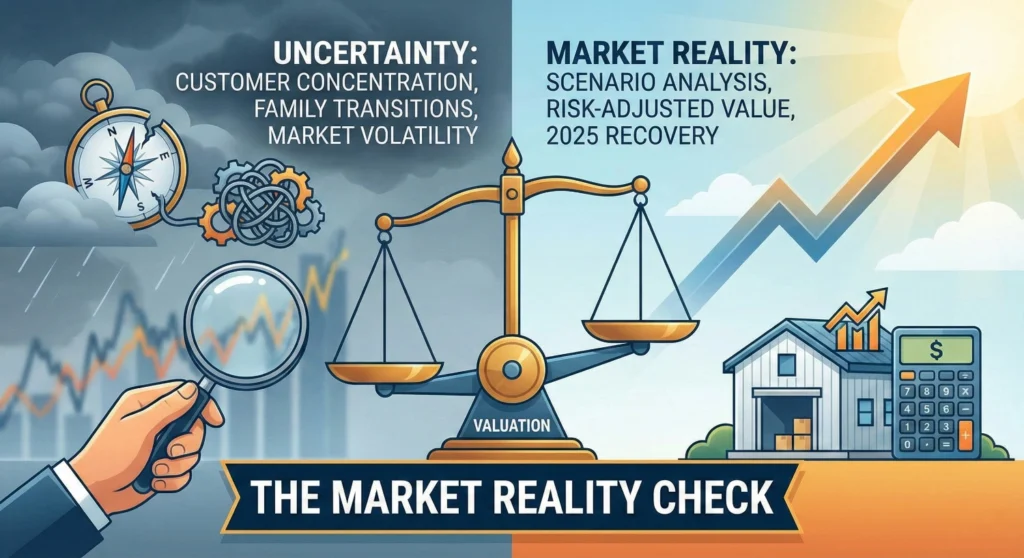
💰 Valuation in Uncertainty: The Market Reality Check

📋 What This Means: Valuation in uncertainty refers to determining a company’s worth when traditional financial models face challenges from customer concentration, family ownership transitions, or regional market dynamics. This involves multiple scenario analysis, management transition planning, and risk-adjusted valuation approaches tailored to market realities. 🎯 The Challenge: Traditional DCF models break down when dealing with owner-operator businesses, concentrated customer bases, or regional market dependencies common in middle market companies. ⚖️ Why It Matters: Average middle market M&A valuations declined to 9.4x EV/EBITDA in 2024 Middle Market M&A Valuations Index | Capstone Partners, but deal volume shows a general upward trend in May 2025, indicating a resurgence in M&A activity per M&A activity insights: June 2025 | EY – US. The vast majority (79%) of total advisors surveyed anticipate 2025 deal flow to increase as per Global M&A Trends Survey Report (2024-2025) | Capstone Partners, making accurate valuation methodology critical as the market rebounds. Manufacturing has shown resilience with average TEV/EBITDA multiple increasing from 6.5x to 6.9x Middle-Market Deal Activity Advances in 2024; Is Momentum Building? | Forvis Mazars year-over-year, while there was an ~9% increase in the valuation multiple offered by buyers, from 10.2x to 11.1x, from H1 2024 to H1 2025 Manufacturing EBITDA & Valuation Multiples – 2025 Report – First Page Sage in the manufacturing sector specifically. 🏆 Real Deal Example: When a strategic buyer evaluated a $50 million revenue business services company in early 2024, traditional models suggested 6.5x EBITDA. However, the company had 40% revenue concentration with two key customers, family ownership succession issues, and dependency on the founder’s relationships. Using multiple scenario analysis—modeling base case, upside, and downside outcomes for customer retention rates, management transition success, and competitive responses—the buyer structured a deal at 5.2x EBITDA with earnouts tied to customer retention and revenue diversification milestones. This risk-adjusted approach proved prescient as middle market valuations compressed through 2024, but positioned both parties well for the 2025 recovery with built-in upside mechanisms. 🔑 Our Take: With 63% of leveraged lenders expecting momentum for more M&A/LBO deal flow to build in 2025 as per 2025 M&A Outlook: Is the Middle Market Finally Ready to Move? | Eaton Square, middle market valuations require multiple scenario analysis that accounts for concentration risks, management transitions, and market position vulnerabilities – especially as buyers become more selective in the recovering market. 🤝 Discussion Welcome: Have questions about how risk-adjusted valuation approaches apply to your industry’s unique challenges as we navigate the 2025 market recovery? We enjoy these strategic discussions about valuation methodology.

Global Pulse

Insurance M&A Activity Hits the Brakes in North America

The North American insurance brokerage M&A market is cooling off, with deal activity declining 8% in the first half of 2025. OPTIS Partners reported 319 transactions across the US and Canada, down from 345 in the same period last year. Market Enters “New Normal”: Industry experts believe the market has reached a sustainable pace after years of frenzied deal-making. Steve Germundson of OPTIS Partners expects annual deal volume to stabilize at 750-800 transactions going forward. Despite the overall slowdown, Q2 2025 showed signs of recovery with 168 deals—an 11% increase from Q2 2024. Private Equity Still Dominates: Private equity-backed firms continue driving consolidation, accounting for 73% of all deals through 32 active buyers. The top 11 buyers captured 59% of total deal volume, with most backed by private equity capital. BroadStreet Partners led activity with 39 deals, followed by Hub International (27) and Inszone Insurance Services (18). P&C Focus Continues: Property and casualty agencies dominated transactions, representing 209 of the 319 deals (65%). Mixed P&C and benefits agencies accounted for 27 deals (8%), while standalone benefits agencies comprised 42 transactions (13%). Most transactions involved US-based sellers (305), while Canadian brokerages accounted for 14 deals. The data suggests the insurance M&A market is transitioning from explosive growth to measured consolidation, with sustained demand for P&C distribution assets driving strategic acquisitions focused on geographic expansion and scale.

Deal Strategy

Cross-Border M&A: The Regulatory Maze

What This Means: Cross-border M&A involves acquisitions between companies in different countries, requiring navigation of multiple regulatory frameworks, foreign investment laws, tax treaties, and political considerations. Middle market cross-border deals face unique challenges including limited resources for regulatory compliance and cultural integration across borders. The Challenge: International deals face complexity disproportionate to their size – foreign investment reviews, multiple regulatory jurisdictions, and cultural considerations that can overwhelm smaller deal teams. Why It Matters: Cross-border deals offer significant growth potential but require sophisticated regulatory navigation and extended timelines to avoid costly failures. Illustrative Deal Scenario: A C$120 million Canadian manufacturing company’s acquisition of a US$95 million U.S. competitor encountered unexpected complexity: The transaction extended from a planned 6-month closing to 14 months, with combined advisory costs reaching C$4.2 million. However, the combination achieved 28% cost synergies through consolidated North American operations and shared supply chains. Key Insight: In middle market cross-border M&A, regulatory complexity often exceeds financial complexity, requiring specialized expertise and extended timelines. Critical Success Factors:

Scroll to Top