KSMC

Author name: admin

Global Pulse

Insurance M&A Activity Hits the Brakes in North America

The North American insurance brokerage M&A market is cooling off, with deal activity declining 8% in the first half of 2025. OPTIS Partners reported 319 transactions across the US and Canada, down from 345 in the same period last year. Market Enters “New Normal”: Industry experts believe the market has reached a sustainable pace after years of frenzied deal-making. Steve Germundson of OPTIS Partners expects annual deal volume to stabilize at 750-800 transactions going forward. Despite the overall slowdown, Q2 2025 showed signs of recovery with 168 deals—an 11% increase from Q2 2024. Private Equity Still Dominates: Private equity-backed firms continue driving consolidation, accounting for 73% of all deals through 32 active buyers. The top 11 buyers captured 59% of total deal volume, with most backed by private equity capital. BroadStreet Partners led activity with 39 deals, followed by Hub International (27) and Inszone Insurance Services (18). P&C Focus Continues: Property and casualty agencies dominated transactions, representing 209 of the 319 deals (65%). Mixed P&C and benefits agencies accounted for 27 deals (8%), while standalone benefits agencies comprised 42 transactions (13%). Most transactions involved US-based sellers (305), while Canadian brokerages accounted for 14 deals. The data suggests the insurance M&A market is transitioning from explosive growth to measured consolidation, with sustained demand for P&C distribution assets driving strategic acquisitions focused on geographic expansion and scale.

Deal Strategy

Cross-Border M&A: The Regulatory Maze

What This Means: Cross-border M&A involves acquisitions between companies in different countries, requiring navigation of multiple regulatory frameworks, foreign investment laws, tax treaties, and political considerations. Middle market cross-border deals face unique challenges including limited resources for regulatory compliance and cultural integration across borders. The Challenge: International deals face complexity disproportionate to their size – foreign investment reviews, multiple regulatory jurisdictions, and cultural considerations that can overwhelm smaller deal teams. Why It Matters: Cross-border deals offer significant growth potential but require sophisticated regulatory navigation and extended timelines to avoid costly failures. Illustrative Deal Scenario: A C$120 million Canadian manufacturing company’s acquisition of a US$95 million U.S. competitor encountered unexpected complexity: Complex tax structuring to optimize withholding taxes and avoid double taxation CFIUS filing requirements and national security review processes Integration of different regulatory frameworks (FDA, EPA, OSHA vs. Canadian equivalents) Currency hedging amid evolving CAD/USD exchange rates Cross-border data transfer compliance requirements The transaction extended from a planned 6-month closing to 14 months, with combined advisory costs reaching C$4.2 million. However, the combination achieved 28% cost synergies through consolidated North American operations and shared supply chains. Key Insight: In middle market cross-border M&A, regulatory complexity often exceeds financial complexity, requiring specialized expertise and extended timelines. Critical Success Factors: Begin regulatory analysis during initial due diligence Budget 18+ months for complex cross-border transactions Engage local advisors early in each jurisdiction

AI Tools Spotlight

ChatGPT Pulse: The AI That Researches While You Sleep

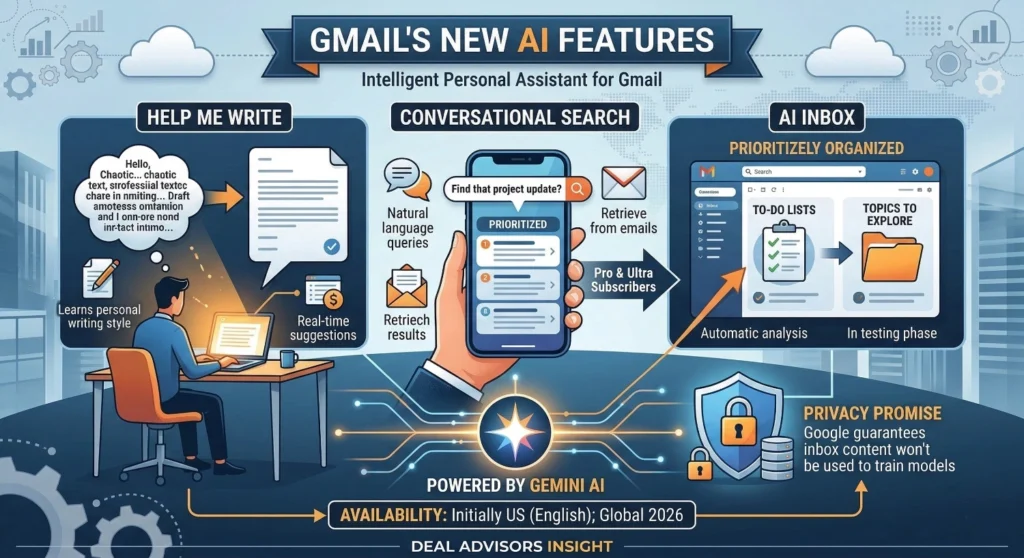
What The Tool Does?: OpenAI’s ChatGPT Pulse, launched recently, transforms the AI tool into a proactive assistant that delivers personalized morning updates tailored to your daily life and goals. Available initially to Pro users on mobile, Pulse works overnight to curate a focused set of insights, reminders, and next steps based on your past chats, memories, feedback, and optional integrations with Gmail and Google Calendar. Key Features: Once a day, Pulse puts together a personalized morning briefing based on information you’ve shared through your chats, saved memories, and calendar events. It presents 5 to 10 easy-to-scan visual “cards” with helpful follow-ups, practical tips like quick dinner ideas or meeting reminders, and suggestions to support your goals such as fitness or travel plans. Why It Matters?: ChatGPT Pulse is a leap toward making advanced AI support as accessible as a morning routine. It saves you time, enhances organization, and helps make better decisions with AI silently managing complex tasks behind the scenes. By shifting ChatGPT from a reactive Q&A bot to a proactive personal assistant, OpenAI aims to democratize high-level productivity tools, initially targeting paying Pro users and soon expanding more broadly.

Deal Strategy

Technology Due Diligence: Who Really Owns the Technology?

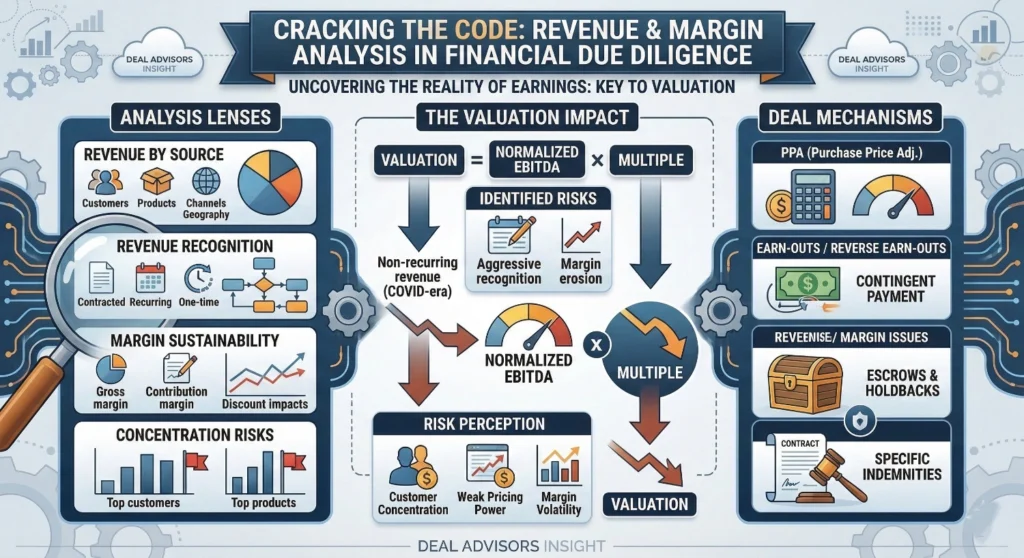
What This Means: Technology due diligence is the comprehensive evaluation of a target company’s technology assets, including software architecture, intellectual property, development capabilities, security systems, and scalability potential. This process assesses code quality, technical debt, cybersecurity vulnerabilities, and patent portfolios. The Challenge: Technology due diligence must uncover invisible risks: Can the code handle 10x growth? Are there unpatched security vulnerabilities? Is the codebase dependent on outdated frameworks or single developers? Does the company actually own its IP, or is it built on improperly licensed open-source code? These questions determine whether you’re buying an asset or a liability. Why It Matters: Technology problems are expensive to discover late. Whether it’s IP ownership disputes, technical debt requiring complete rebuilds, or security vulnerabilities exposing the business to breaches, issues missed during due diligence are costly to resolve and can derail the entire acquisition strategy. Real Deal Example: Hidden technical issues can derail entire acquisitions. When eBay bought Skype for $2.6 billion in 2005, due diligence missed that Skype didn’t own critical peer-to-peer technology (“Global Index”) that powered its core calling functionality – it was licensed from Joltid, a separate company owned by Skype’s founders. Joltid sued eBay over licensing of the peer-to-peer technology that Skype used to distribute calls. eBay failed to identify that core technology was licensed, not owned. The licensing terms weren’t properly secured. This was discoverable during due diligence but was missed or inadequately addressed. Combined with broader strategic failures, eBay took a $1.4 billion write-down in 2007 and sold its majority stake just four years later, having learned an expensive lesson: verifying technology ownership is foundational to successful integration. Framework Available: If you’d like to explore technology due diligence frameworks that catch these critical ownership issues, we can discuss how they apply to different deal types and industries.

AI Tools Spotlight

Blueprint for Integration Management: The Royal Bank of Canada-HSBC Canada Playbook

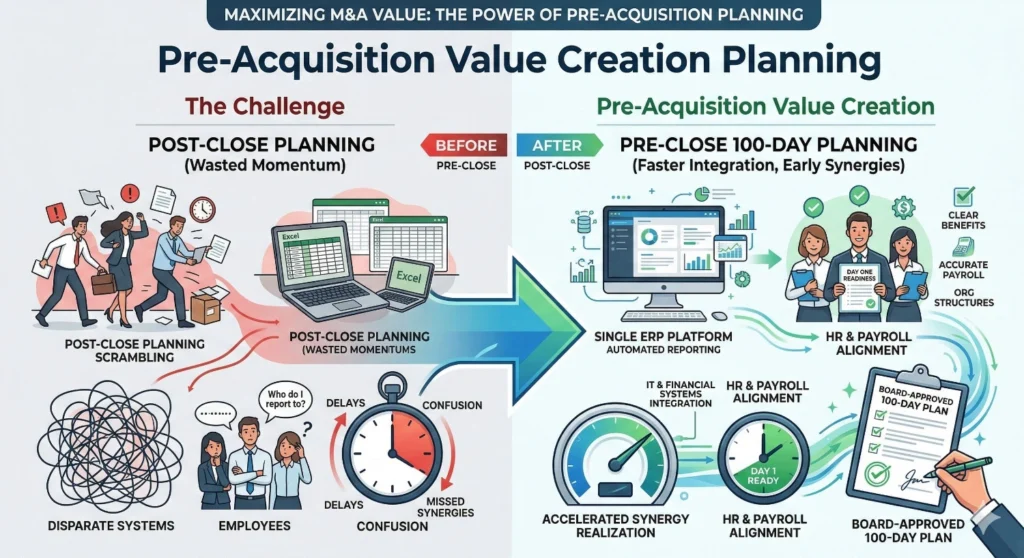
What This Means: Integration management involves the systematic combination of two organizations’ operations, cultures, systems, and strategies to achieve acquisition objectives. This includes establishing an Integration Management Office (IMO), designing organizational structures, aligning cultures, consolidating systems, and optimizing performance toward synergy realization. The Challenge: While acquirers dedicate significant resources to due diligence, insufficient planning for integration often creates a gap between deal rationale and value capture—turning promising transactions into stalled transformations. Why It Matters: Studies consistently show that 50–70% of acquisitions fail to meet their objectives, largely due to weak integration design and insufficient post-deal governance. Effective integration management is therefore the critical determinant of acquisition success. Real Deal Example: On March 28, 2024, Royal Bank of Canada (RBC) completed its acquisition of HSBC Bank Canada (HSBC) in an all-cash $13.5 billion deal, marking one of Canada’s largest bank acquisitions in history. The deal positioned RBC to expand its client base, enrich its product suite, and accelerate growth in competitive banking sectors, demonstrating robust integration management and value capture in a complex, large-scale financial services transaction. Connect & Share: Connect with us to share insights from your own deals – learning from real-world execution accelerates collective mastery of M&A integration management. 🌍 Global Pulse The AI Acquisition Paradox: Why Buyers Are Enthusiastic But Hesitant? Artificial intelligence has become the most talked-about technology in boardrooms worldwide, but despite overwhelming interest, more than one-in-three buyers haven’t made a single AI-related acquisition. This paradox reveals a market caught between opportunity and uncertainty, where the promise of transformation clashes with practical concerns about value, talent, and obsolescence. What’s driving AI Acquisitions? According to a 2025 Global Buyers Report by Equiteq, Companies aren’t buying AI for cost savings—they’re chasing differentiation. The report shows 76% of corporate acquirers cite service enhancement as their primary driver, while 71% focus on competitive advantage. Private Equity firms mirror these priorities, with 70% seeking differentiation for portfolio companies. This signals a fundamental shift: AI isn’t viewed as an operational tool but as essential to staying relevant. The AI Capabilities In Demand Why The Hesitation? Where Companies Stand Today? Many companies are still establishing concrete use cases that create genuine competitive advantages. Success increasingly hinges on data infrastructure—AI models are only as effective as the data feeding them. Beyond valuation concerns, three operational challenges are slowing deal activity: (i) risk aversion around unproven technologies, (ii) lack of internal expertise to properly evaluate AI companies, and (iii) regulatory uncertainty as governments worldwide grapple with AI oversight. These areas require greater certainty before buyers commit capital to AI acquisitions. What’s Next For AI M&A The market is maturing from hype-driven speculation toward disciplined deal-making. Buyers are asking harder questions about real business problems, talent sustainability, and value justification. While current activity remains measured, acquisition momentum will build as AI technologies mature, use cases crystallize, and tangible outcomes multiply. The buyers sitting on the sidelines today aren’t disinterested—they’re waiting for clearer signals about which capabilities will deliver lasting value in an industry where patience may prove the smartest strategy. 🤖 AI Tools Spotlight Perplexity’s Comet, The AI Browser, Is Now FREE Perplexity’s Comet browser, once an exclusive beta for Max subscribers, became free for all users recently in October, 2025. More than another AI add-on, Comet reimagines how people interact with the web—turning browsing into intelligent action. What The Tool Does?: Beyond simple queries, Comet lets users request practical tasks—comparing products, organizing research, or drafting summaries—using natural language prompts. Its integrated tools such as Discover (personalized recommendations) and Spaces (project organization) streamline workflows for professionals managing large information volumes. Key Features: Unlike traditional browsers that simply display information, Comet’s built-in sidecar assistant actively engages with what you view. It answers questions, summarizes content, and navigates web pages—all in real time and without switching tabs. Testers report that it works across platforms like social media, YouTube, and Google Docs. Comet also comes preloaded with Perplexity’s AI search engine, which delivers direct, cited answers instead of lists of links. The result removes the repetitive search‑click‑read cycle of standard browsing. Why It Matters?: Comet is already available on Windows, macOS, and Linux systems, with mobile versions on the way. Its performance shows what’s possible when search and action blend into a single experience. Whether the world is ready for an autonomous browser—and whether it should be—is the debate just beginning.

Deal Strategy

Creative Financing: Structuring Smarter Deals

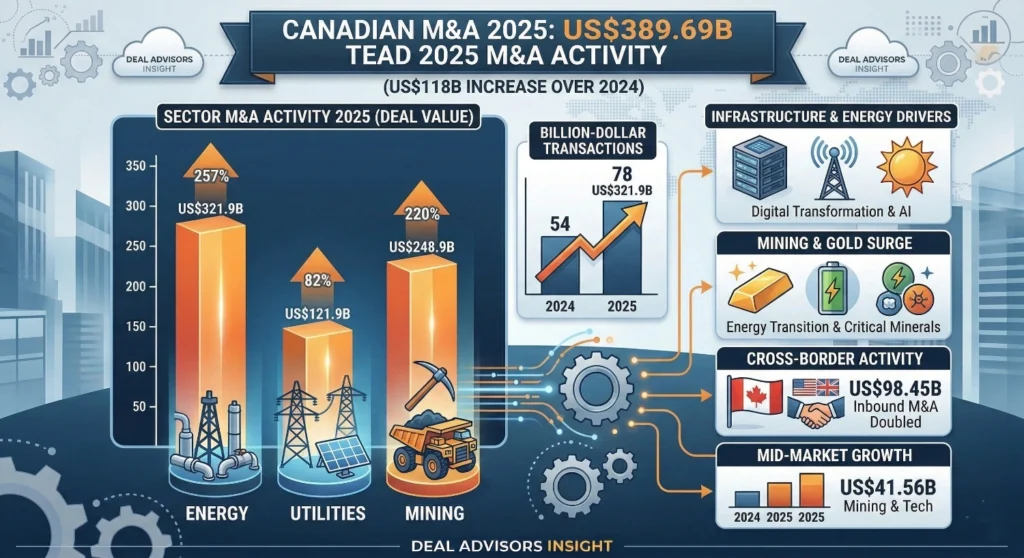
What This Means: Creative financing involves structuring deal funding through non-traditional methods when conventional debt or equity financing is insufficient, unavailable, or strategically undesirable. This can include leveraged buyouts, mezzanine financing, contingent consideration, or complex debt arrangements. The Challenge: In hotly contested acquisitions, pure cash offers may seem attractive to sellers, but buyers must balance competitive positioning with capital efficiency and shareholder value preservation. Why It Matters: Strategic financing structures can optimize deal outcomes across all transaction types—whether addressing competitive auctions, bridging valuation gaps, preserving capital flexibility, or aligning stakeholder interests—but require sophisticated execution to avoid overpaying or overleveraging. Real Deal Example: Disney’s $71.3 billion acquisition of 21st Century Fox assets in 2019. Mid-Market Application: While this example showcases a mega-deal between public companies, the same creative financing principles apply powerfully to middle-market and private company transactions. Consider a $10M acquisition where the buyer uses seller financing for 20% of the purchase price, earnout provisions tied to EBITDA growth, and management rollover equity—this hybrid approach can help bridge valuation gaps, preserve buyer cash, and align all parties around success metrics. The scale may differ, but the strategic logic of optimizing deal structure through creative financing remains equally valuable. Deep Dive Available: For strategies on structuring competitive bids that win on value rather than just cash, including hybrid structures, let’s schedule a discussion. 🌍 Global Pulse M&A Market Update: September 2025 The M&A landscape in 2025 continues to show divergent trends between large-cap and mid-market activity. While dollar volumes have increased materially thanks to headline-grabbing transactions worth $10+ billion, deal counts remain down 10-20%, and the mid-market has not seen the same boost. Economic policy is stabilizing, with reduced uncertainty and supportive tax and deregulation tailwinds, though tariff volatility persists. Financing remains robust as private debt and secondary capital strategies help firms meet their liquidity needs, especially in the mid-market where traditional exits have proven difficult. Non-discretionary services continue to drive mid-market deals, while technology, financial services, and healthcare headline large-cap activity. Recent notable transactions include Advent’s acquisition of LayerZero Power Systems (industrial technology), TopBuild’s $810M purchase of Progressive Roofing (commercial services), and Vomela Companies’ acquisition of PFL Tech (marketing automation software). Exit activity is expected to build slowly but steadily alongside continued M&A momentum into 2026—should interest rate relief materialize as expected(1) 🤖 AI Tools Spotlight Gamma Launches Version 3.0 With New AI Capabilities What The Tool Does?: Gamma is an AI presentation platform that creates professional slide decks from text prompts. Version 3.0 transforms it into an intelligent design assistant that can automatically redesign entire presentations and integrate with business workflows. Key Features: Why It Matters?: This latest update shifts Gamma from manual slide editing to intelligent automation. With 50 million users, it addresses the core problem: presentations take too much time to create.

Scroll to Top