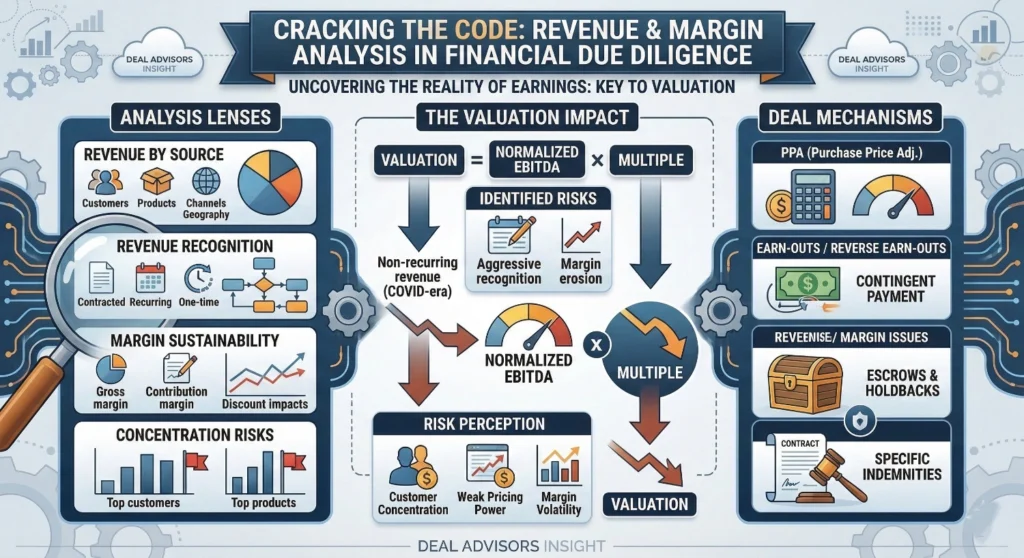
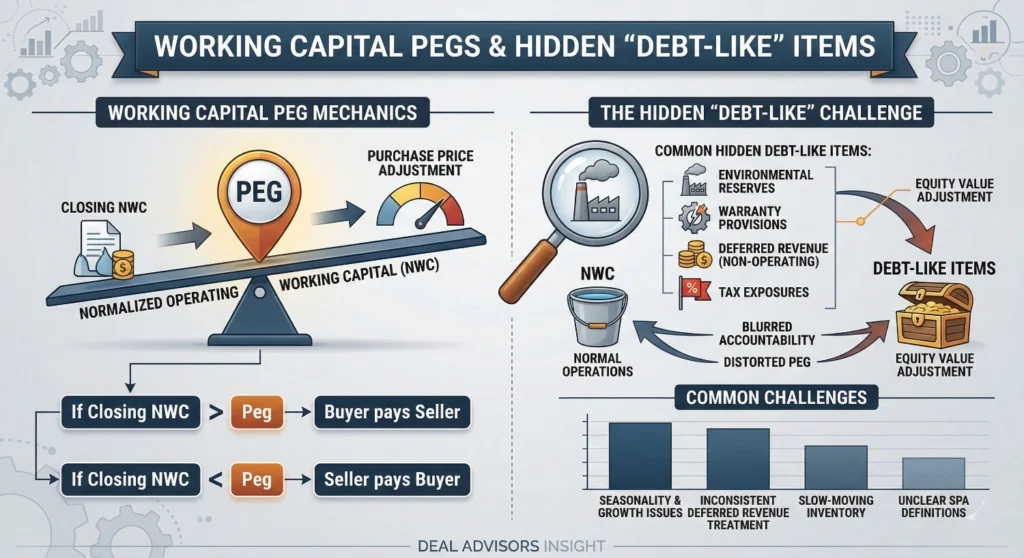
In our last issue, we explored working capital pegs and debt-like items. This issue examines revenue and margin quality—the bedrock of any Quality of Earnings (QoE) analysis and the primary driver of enterprise value. What This Means: Revenue and margin analysis evaluates not just how much a business earns, but how reliable, repeatable, and profitable those earnings really are. It dissects revenue drivers (price, volume, mix), customer and product economics, and cost structures to identify normalized earnings. The Challenge: Reported sales growth and margins often mask underlying fragility. Common issues include: Why It Matters (and How It Impacts Valuation): Valuation in deals is usually anchored on a multiple of normalized EBITDA. If revenue is less recurring than presented or margins are overstated, normalized EBITDA comes down—and every turn of the multiple compounds that value impact. Beyond the level of EBITDA, quality of revenue and margins affects the multiple itself: In effect, revenue and margin analysis influences both sides of the valuation equation: the normalized earnings, and the multiple (risk and sustainability). What Does the Financial Due Diligence Analyze?: A robust due diligence systematically dissects revenue and margins through the following lenses: Real Deal Context: During a sell-side due diligence for a commercial services company, our analysis revealed significant revenue and outsized margins from COVID-related supplies (hand sanitizers, disinfectants, etc.) during peak pandemic months. We adjusted reported revenue by removing these non-recurring sales and the associated margins from the normalized run-rate, thereby presenting a credible view of underlying performance. Deal Mechanisms to Address Revenue and Margin Issues: When revenue or margin risks are identified, common deal structuring mechanisms include: These tools allow parties to share risk around uncertain revenue and margin outcomes instead of walking away from the deal. Are You Prepared? If you are contemplating a transaction or want a pre-diligence ‘health check’ around your business, we would be happy to discuss.