KSMC

Author name: admin

AI Tools Spotlight

HeadsUp.bot: Competitor Intelligence Made Simple

What The Tool Does?: HeadsUp monitors your competitors automatically and tells you when they make important changes. Instead of just alerting you, it explains what the changes mean and suggests how to respond. Key Features: Why It Matters?: With instant awareness of competitor shifts, a business can respond before customers notice, protect it’s market share, and turn their moves into its own advantage. Explore the tool here.

Global Pulse

China Issues New Draft M&A Loan Rules to Ease Terms and Widen Scope

China’s National Financial Regulatory Administration has released draft regulations to expand and ease bank lending for mergers and acquisitions (M&A), marking the first time bank loans can support minority equity deals. The new rules split M&A into two categories: “control acquisitions,” where buyers take majority stakes, and “equity acquisitions,” for minority stakes of at least 20%. Under the draft, banks can lend up to 70% of the deal value for control acquisitions with loan terms extended to 10 years from the previous 7 years. For equity acquisitions, loans can cover up to 60% with a maximum 7-year term. Banks must meet asset thresholds—CNY 50 billion (~$7 billion) for control acquisition loans and CNY 100 billion (~$14 billion) for equity acquisition loans. With over 3,500 M&A deals completed in China in the first half of 2025, totaling nearly CNY 800 billion (~$111 billion), the expanded loan scope aims to further support corporate restructuring and investment diversity.

Deal Strategy

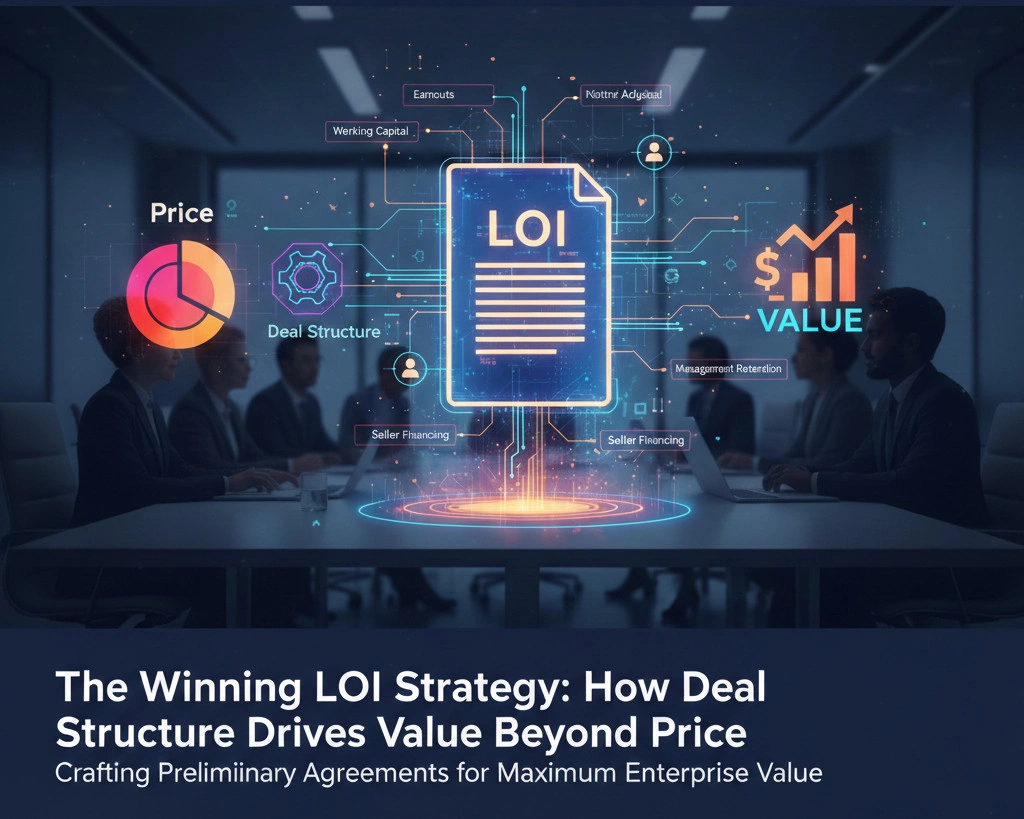
The Winning LOI Strategy: How Deal Structure Drives Value Beyond Price

What This Means: Letter of Intent (LOI) negotiation involves crafting preliminary agreements that outline key deal terms, conditions, and timelines before formal purchase agreements. LOIs often include unique provisions for earnouts, working capital adjustments, management retention, and seller financing. The Challenge: These preliminary agreements must balance complexity with speed, often addressing seller financing, management transitions, and earnout structures that differentiate them from larger corporate deals. Why It Matters: LOI terms can create or destroy millions in value before formal negotiations begin. In middle market context, deal structure often matters more than headline price due to seller tax considerations and growth expectations. Real Deal Example: Vestar Capital Partners’ Tech24 Investment Tech24 was named an “Honorable Mention” in Mergers & Acquisitions’ 2024 Middle-Market Deals of the Year, demonstrating exemplary deal structuring. Here’s what made this transaction notable: In October 2023, Vestar Capital Partners joined HCI Equity Partners and Tech24’s management in a partnership-driven recapitalization of Tech24, the leading U.S. provider of commercial foodservice equipment repair and maintenance. Key Insight: Success in preliminary negotiations depends on understanding seller motivations beyond price maximization – tax efficiency, management continuity, and growth participation often drive final decisions. Bonus Tip: Industry data suggests earnout success rates improve significantly when tied to seller-controllable metrics (such as company-specific revenue, EBITDA, or operational milestones) rather than broader market conditions. Discussions welcome: Whether you’re working through a specific transaction or need guidance on structuring the LOI terms, we welcome the opportunity to discuss. We also maintain a comprehensive checklist of essential items to include in Letters of Intent.

AI Tools Spotlight

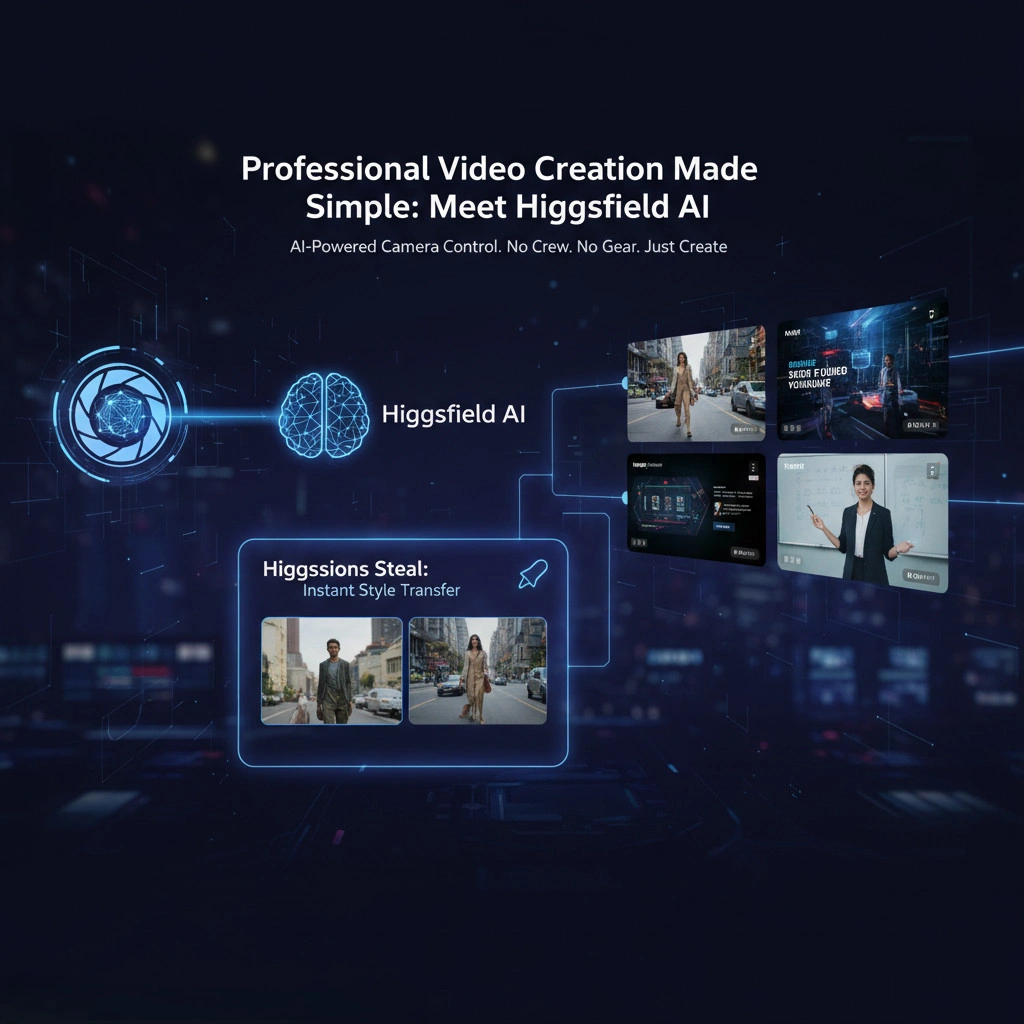
Professional Video Creation Made Simple: Meet Higgsfield AI

Imagine creating professional-looking videos with dramatic camera movements—without expensive equipment or filmmaking experience. That’s what Higgsfield AI delivers. What the tool does?: Higgsfield transforms text descriptions or images into dynamic video clips with professional camera work. You describe what you want or upload content, and the AI creates videos with sophisticated camera movements. About Higgsfield Steal: A standout feature that lets you copy any image style instantly. See an image online you love? Just point and click—it captures the outfit, pose, vibe, and style to generate something similar but not identical. No prompts needed, just one-click inspiration that saves hours of manual description. Who Can Use It?: Content creators, business owners, educators, marketers, and anyone wanting compelling video content. The Bottom Line: Higgsfield democratizes professional video production. No crew, no gear—just AI-powered camera control that makes high-quality video creation accessible to everyone. Explore the tool here.

Global Pulse

Perplexity AI Makes Stunning $34.5B Bid for Google Chrome Browser

AI search company Perplexity has submitted an unsolicited $34.5 billion offer to purchase Google’s Chrome browser, a bold move that comes as Google faces anti-trust pressure following last year’s landmark ruling. The Numbers Why Now?: The Department of Justice has proposed forcing Google to sell Chrome as an anti-trust remedy, though Google plans to appeal. Perplexity’s bid positions the AI startup to capitalize on regulatory pressure against Big Tech. The Bigger Picture: Perplexity launched its own browser “Comet” in July, while OpenAI is reportedly developing one too. The three-year-old startup has also bid for TikTok and been courted by Meta and Apple. While Perplexity’s bid is considered a long shot given Google’s resistance, it signals intensifying competition for web browser dominance in the AI era.

Deal Strategy

Target Identification: The Netflix Algorithm for M&A

What This Means: Target identification is the systematic process of finding potential acquisition candidates using data-driven methodologies rather than traditional industry-focused approaches. Like Netflix’s recommendation algorithm analyzes viewing patterns to suggest content, M&A algorithms analyze business patterns, market behaviors, and performance metrics. The Challenge: Traditional target screening relies on obvious criteria – same industry, similar size, geographic proximity. This approach can miss valuable opportunities. Why It Matters: The most successful acquirers use data-driven approaches to identify targets before they’re obvious, creating competitive advantages and better valuations. Real Deal Example: Google’s 2006 acquisition of YouTube for $1.65 billion seemed overpriced for a two-year-old startup losing money. But Google’s data analytics had identified something others missed – user engagement metrics showed YouTube users spent significantly more time on the platform than on traditional video sites. YouTube’s continued explosive growth is evident in 2025: $8.93 billion in Q1 2025 (up 10.3% year-over-year) and $9.8 billion in Q2 2025 (up 13% year-over-year), putting the platform on track for over $37 billion in annual ad revenue for 2025 alone. Key Insight: Using behavioral data alongside conventional financial metrics to identify target potential.

AI Tools Spotlight

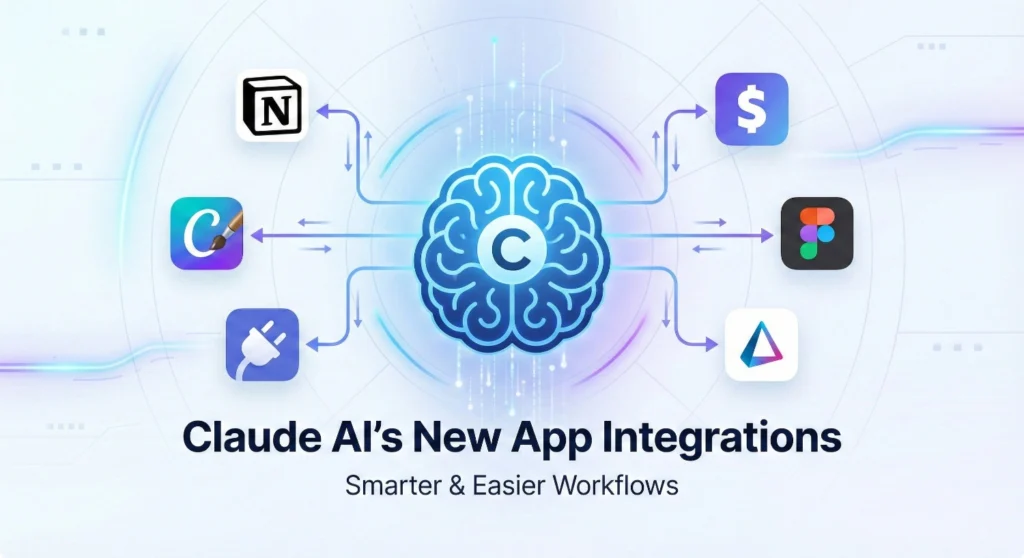
Claude AI’s New App Integrations Make Workflow Smarter and Easier

Anthropic’s AI assistant Claude has taken a big step forward with seamless integration into popular apps like Notion, Canva, Stripe, Figma, Socket, and Prisma. Users no longer need to repeatedly explain their tasks or copy-paste information—Claude can now access relevant app data directly to provide smarter, context-aware assistance. This upgrade boosts productivity by streamlining workflows and reducing repetitive explanations. Paid Claude users can explore the growing directory of app connections, unlocking more efficient and collaborative AI support than ever before. Explore Claude here.

Global Pulse

The Rise of the Everyday Millionaire: The EMILLI Phenomenon

A quiet but powerful shift is underway in global wealth. According to the UBS Global Wealth Report 2025, the number of “Everyday Millionaires” (EMILLIs)—those with $1–5 million in assets—has more than quadrupled since 2000, reaching 52 million people worldwide. Further, this segment now controls wealth exceeding $107 trillion—over 2.5 times their aggregate wealth (in real terms) at the turn of the millennium. This nearly matches the $119 trillion owned by individuals with assets above $5 million. What’s Driving the Surge? The main factors are strong real estate appreciation and rising financial markets, especially in the U.S. and Europe. Currency movements and inheritance also play a part, with millions moving into millionaire status almost invisibly. Implications for the Future The continued expansion of the EMILLI segment signals a structural change in global wealth distribution. The “millionaire next door” is no longer an anomaly; they are fast becoming the standard in many markets. As asset values, especially property, continue to climb and financial literacy grows, the EMILLI class is set to play an even more prominent role in the global economy. For deeper insights into this and related topics, you can access the full 2025 Global Wealth Report here.

Deal Strategy

Cultural Due Diligence: Business Integration Success

What This Means: Cultural due diligence is the systematic assessment of organizational cultures, management styles, employee values, and workplace practices to determine compatibility between merging companies. In M&A deals, this often involves navigating family business dynamics, founder transitions, and preserving entrepreneurial cultures. The Challenge: Cultural integration gets insufficient attention during a middle-market transaction, yet family-owned businesses and entrepreneurial cultures are often the primary value drivers that attracted acquirers initially. Why It Matters: Cultural misalignment is one of the leading causes of M&A value destruction in deals, yet it’s often the most preventable cause of deal failure. Real Deal Examples: 1. Failed Integration Due to Cultural Clash A first-time CEO acquired a multi-generational industrial services business in the U.S. Southeast. The business had strong financials, loyal customers, and a history of site-level autonomy. The new owner centralized dispatch and imposed new processes, undermining the autonomy and trust that senior technicians valued. Within six months, three senior technicians with deep client knowledge left. The move, while logical on paper, broke the company’s operating DNA and led to a loss of institutional memory and customer relationships. 2. Successful Family Business Transition – Techno Diesel Techno Diesel, a Quebec-based heavy truck repair business, transitioned from its founders to four daughters, who implemented a structured governance model. The family separated business from family issues by creating a multi-level governance structure, including an executive committee, advisory committee, board of shareholders, and a family council. This allowed for open communication, gradual leadership transition, and preservation of core values. The business grew to 110 employees, diversified into new markets, and maintained family harmony, demonstrating that careful cultural planning and phased integration can drive both business and family success. Read more here. Share Your Experience: If cultural assessment resonates with challenges you’re seeing in potential deals, we’re always interested in hearing different perspectives from the field.

AI Tools Spotlight

🚀 Grammarly Acquires Superhuman: AI Productivity Power-Up!

Grammarly just acquired premium email client Superhuman to build the ultimate AI productivity suite. Superhuman CEO Rahul Vohra and 100+ employees are joining Grammarly, but don’t worry – Superhuman will continue as a product! 🛠️ What Each Tool Does Grammarly ✍️: Your AI writing assistant that fixes grammar, improves clarity, and enhances tone across all platforms. Explore Grammarly here. Superhuman 🏎️: The Ferrari of email clients – saves 4 hours/week with lightning-fast AI email features. Explore Superhuman here. Together, they aim to enable professionals to write smarter and send faster, layering Grammarly’s AI agents into Superhuman’s sleek interface. 🔗 Explore more on the deal here.

Scroll to Top