KSMC

Author name: admin

Global Pulse

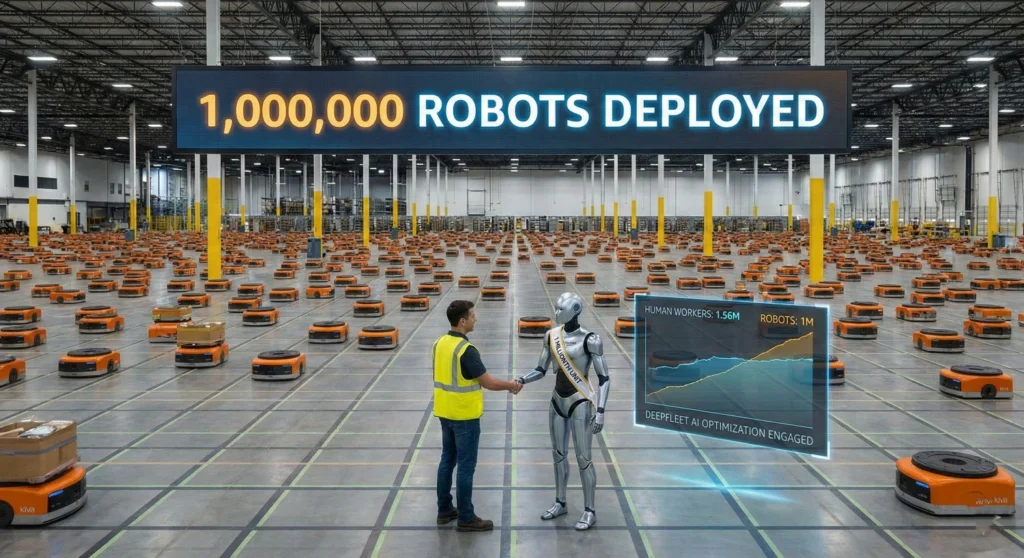
When Machines Match Humans: Amazon’s Robot Army Hits 1 Million

Amazon has reached a striking milestone—deploying its one millionth warehouse robot after 13 years of automation! The milestone robot was recently delivered to a fulfillment center in Japan. With approximately 1.56 million total employees worldwide, the company is swiftly approaching a point where robots may equal human workers in its facilities, with 75% of global deliveries already getting robotic assistance. The e-commerce giant also launched DeepFleet, a new AI model that optimizes robot coordination and promises 10% faster warehouse operations. Amazon’s automation journey began with its 2012 acquisition of Kiva Systems and shows no signs of slowing. 👉 Read more: Amazon deploys its 1 millionth robot, releases generative AI model

Deal Strategy

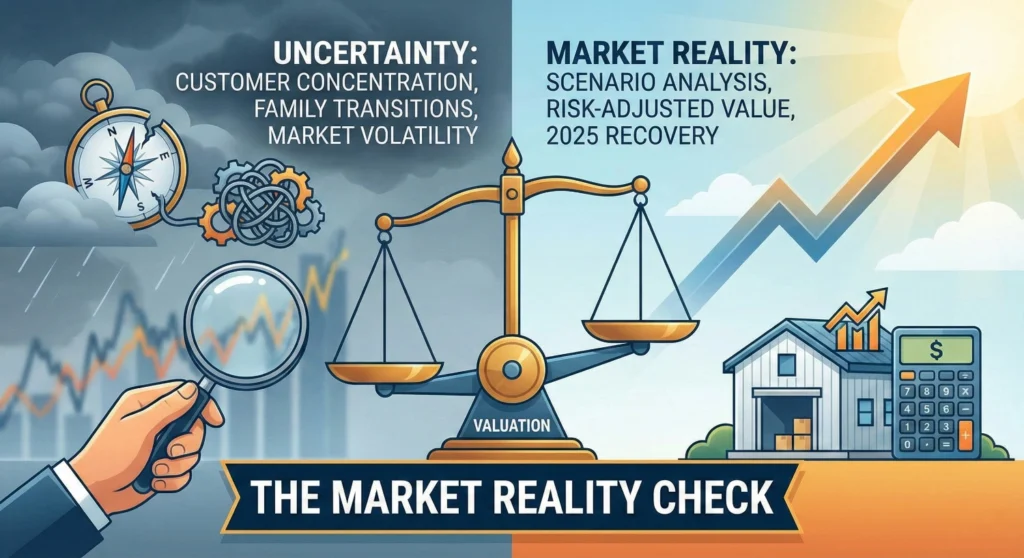
💰 Valuation in Uncertainty: The Market Reality Check

📋 What This Means: Valuation in uncertainty refers to determining a company’s worth when traditional financial models face challenges from customer concentration, family ownership transitions, or regional market dynamics. This involves multiple scenario analysis, management transition planning, and risk-adjusted valuation approaches tailored to market realities. 🎯 The Challenge: Traditional DCF models break down when dealing with owner-operator businesses, concentrated customer bases, or regional market dependencies common in middle market companies. ⚖️ Why It Matters: Average middle market M&A valuations declined to 9.4x EV/EBITDA in 2024 Middle Market M&A Valuations Index | Capstone Partners, but deal volume shows a general upward trend in May 2025, indicating a resurgence in M&A activity per M&A activity insights: June 2025 | EY – US. The vast majority (79%) of total advisors surveyed anticipate 2025 deal flow to increase as per Global M&A Trends Survey Report (2024-2025) | Capstone Partners, making accurate valuation methodology critical as the market rebounds. Manufacturing has shown resilience with average TEV/EBITDA multiple increasing from 6.5x to 6.9x Middle-Market Deal Activity Advances in 2024; Is Momentum Building? | Forvis Mazars year-over-year, while there was an ~9% increase in the valuation multiple offered by buyers, from 10.2x to 11.1x, from H1 2024 to H1 2025 Manufacturing EBITDA & Valuation Multiples – 2025 Report – First Page Sage in the manufacturing sector specifically. 🏆 Real Deal Example: When a strategic buyer evaluated a $50 million revenue business services company in early 2024, traditional models suggested 6.5x EBITDA. However, the company had 40% revenue concentration with two key customers, family ownership succession issues, and dependency on the founder’s relationships. Using multiple scenario analysis—modeling base case, upside, and downside outcomes for customer retention rates, management transition success, and competitive responses—the buyer structured a deal at 5.2x EBITDA with earnouts tied to customer retention and revenue diversification milestones. This risk-adjusted approach proved prescient as middle market valuations compressed through 2024, but positioned both parties well for the 2025 recovery with built-in upside mechanisms. 🔑 Our Take: With 63% of leveraged lenders expecting momentum for more M&A/LBO deal flow to build in 2025 as per 2025 M&A Outlook: Is the Middle Market Finally Ready to Move? | Eaton Square, middle market valuations require multiple scenario analysis that accounts for concentration risks, management transitions, and market position vulnerabilities – especially as buyers become more selective in the recovering market. 🤝 Discussion Welcome: Have questions about how risk-adjusted valuation approaches apply to your industry’s unique challenges as we navigate the 2025 market recovery? We enjoy these strategic discussions about valuation methodology.

Global Pulse

Insurance M&A Activity Hits the Brakes in North America

The North American insurance brokerage M&A market is cooling off, with deal activity declining 8% in the first half of 2025. OPTIS Partners reported 319 transactions across the US and Canada, down from 345 in the same period last year. Market Enters “New Normal”: Industry experts believe the market has reached a sustainable pace after years of frenzied deal-making. Steve Germundson of OPTIS Partners expects annual deal volume to stabilize at 750-800 transactions going forward. Despite the overall slowdown, Q2 2025 showed signs of recovery with 168 deals—an 11% increase from Q2 2024. Private Equity Still Dominates: Private equity-backed firms continue driving consolidation, accounting for 73% of all deals through 32 active buyers. The top 11 buyers captured 59% of total deal volume, with most backed by private equity capital. BroadStreet Partners led activity with 39 deals, followed by Hub International (27) and Inszone Insurance Services (18). P&C Focus Continues: Property and casualty agencies dominated transactions, representing 209 of the 319 deals (65%). Mixed P&C and benefits agencies accounted for 27 deals (8%), while standalone benefits agencies comprised 42 transactions (13%). Most transactions involved US-based sellers (305), while Canadian brokerages accounted for 14 deals. The data suggests the insurance M&A market is transitioning from explosive growth to measured consolidation, with sustained demand for P&C distribution assets driving strategic acquisitions focused on geographic expansion and scale.

Deal Strategy

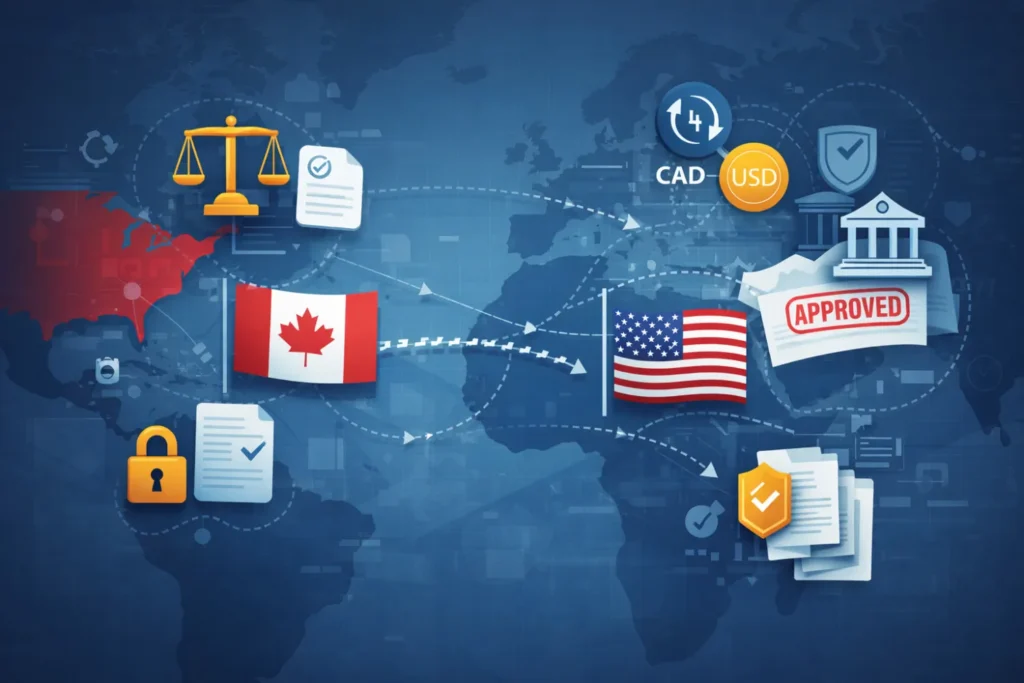
Cross-Border M&A: The Regulatory Maze

What This Means: Cross-border M&A involves acquisitions between companies in different countries, requiring navigation of multiple regulatory frameworks, foreign investment laws, tax treaties, and political considerations. Middle market cross-border deals face unique challenges including limited resources for regulatory compliance and cultural integration across borders. The Challenge: International deals face complexity disproportionate to their size – foreign investment reviews, multiple regulatory jurisdictions, and cultural considerations that can overwhelm smaller deal teams. Why It Matters: Cross-border deals offer significant growth potential but require sophisticated regulatory navigation and extended timelines to avoid costly failures. Illustrative Deal Scenario: A C$120 million Canadian manufacturing company’s acquisition of a US$95 million U.S. competitor encountered unexpected complexity: The transaction extended from a planned 6-month closing to 14 months, with combined advisory costs reaching C$4.2 million. However, the combination achieved 28% cost synergies through consolidated North American operations and shared supply chains. Key Insight: In middle market cross-border M&A, regulatory complexity often exceeds financial complexity, requiring specialized expertise and extended timelines. Critical Success Factors:

AI Tools Spotlight

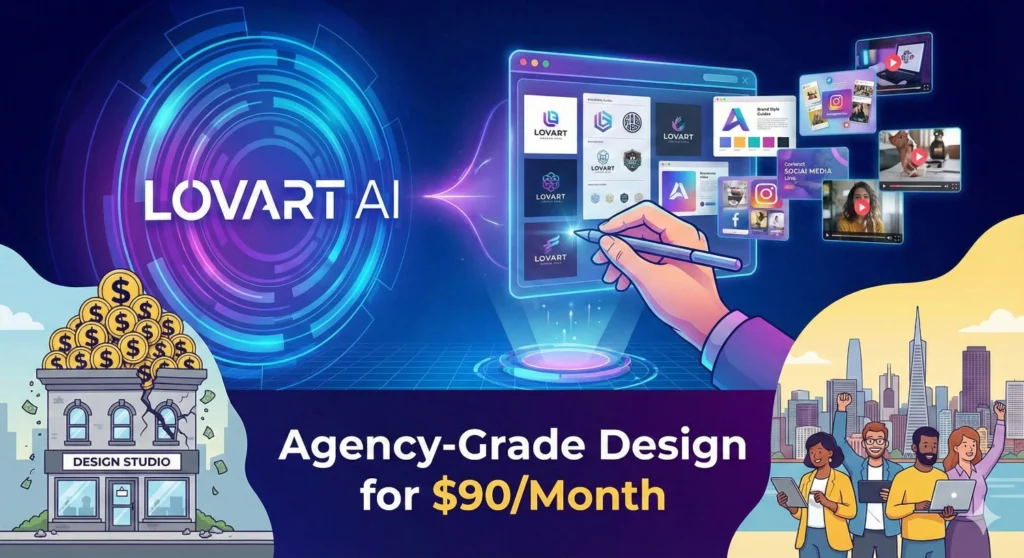
Lovart AI Launches Globally, Promising Agency-Grade Design for $90/Month

Lovart AI has officially launched after exiting beta phase last week, positioning itself as an AI design agent that delivers professional branding work at a fraction of traditional agency costs. Disrupting Design Economics: The San Francisco startup claims its platform can produce agency-quality branding in minutes for under $90 monthly—a dramatic reduction from typical five or six-figure agency fees. This promises to democratize high-end design work for smaller businesses and in-house teams. What Lovart Does: Lovart is an end-to-end design agent that creates comprehensive branding packages, marketing materials, logos, visual identities, and multimedia content. Users simply input their brand requirements, and the AI handles everything from strategic planning to final execution across images, videos, and 3D assets.

AI Tools Spotlight

ChatGPT Pulse: The AI That Researches While You Sleep

What The Tool Does?: OpenAI’s ChatGPT Pulse, launched recently, transforms the AI tool into a proactive assistant that delivers personalized morning updates tailored to your daily life and goals. Available initially to Pro users on mobile, Pulse works overnight to curate a focused set of insights, reminders, and next steps based on your past chats, memories, feedback, and optional integrations with Gmail and Google Calendar. Key Features: Once a day, Pulse puts together a personalized morning briefing based on information you’ve shared through your chats, saved memories, and calendar events. It presents 5 to 10 easy-to-scan visual “cards” with helpful follow-ups, practical tips like quick dinner ideas or meeting reminders, and suggestions to support your goals such as fitness or travel plans. Why It Matters?: ChatGPT Pulse is a leap toward making advanced AI support as accessible as a morning routine. It saves you time, enhances organization, and helps make better decisions with AI silently managing complex tasks behind the scenes. By shifting ChatGPT from a reactive Q&A bot to a proactive personal assistant, OpenAI aims to democratize high-level productivity tools, initially targeting paying Pro users and soon expanding more broadly.

Global Pulse

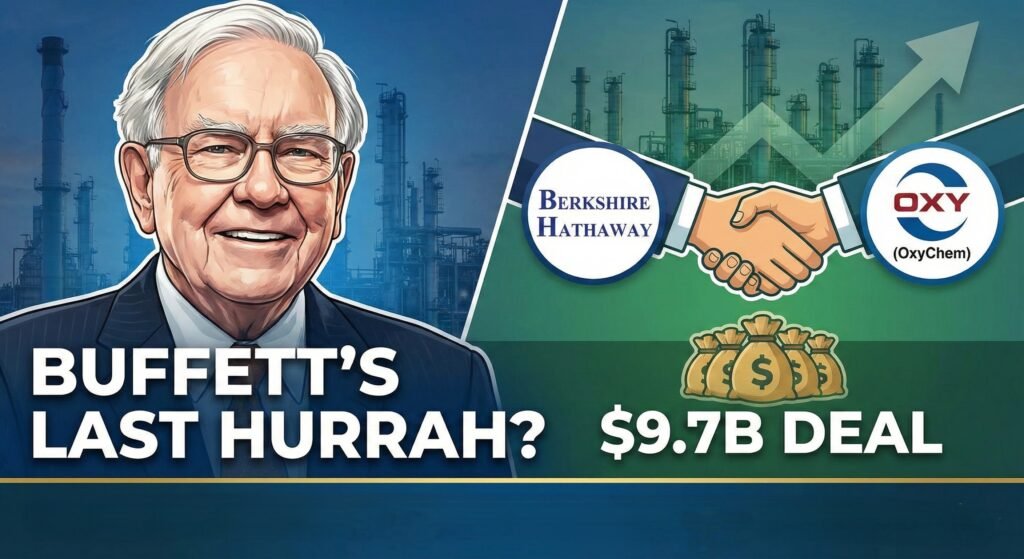
Buffett’s Last Hurrah? Berkshire’s $9.7B Bet on OxyChem

Warren Buffett is going out with a bang—or at least, that’s what everyone’s assuming! Berkshire Hathaway is acquiring Occidental Petroleum’s chemicals division, OxyChem, in a $9.7 billion all-cash deal. This marks Berkshire’s largest deal since the $12 billion Alleghany purchase in 2022. The deal is a clear win-win: Berkshire gains a steady, cash-generating business at attractive terms, while Occidental uses the proceeds to cut debt by $6.5 billion, strengthening its balance sheet in a challenging energy environment. Buffett’s long-standing ties with Occidental add depth to this move—Berkshire owns around 28-30% of the oil company and previously helped finance Occidental’s Anadarko takeover in 2019. The acquisition solidifies Berkshire’s foothold in the energy and chemicals sector while allowing Occidental to focus on debt reduction and shareholder returns. As Buffett prepares to hand over the reins to Greg Abel later this year, this deal embodies his signature value investing approach: predictable, durable businesses over flashier, high-growth bets. Whether or not it’s his final deal, Buffett’s OxyChem acquisition underscores a legacy grounded in patience, pragmatism, and long-term vision.

Deal Strategy

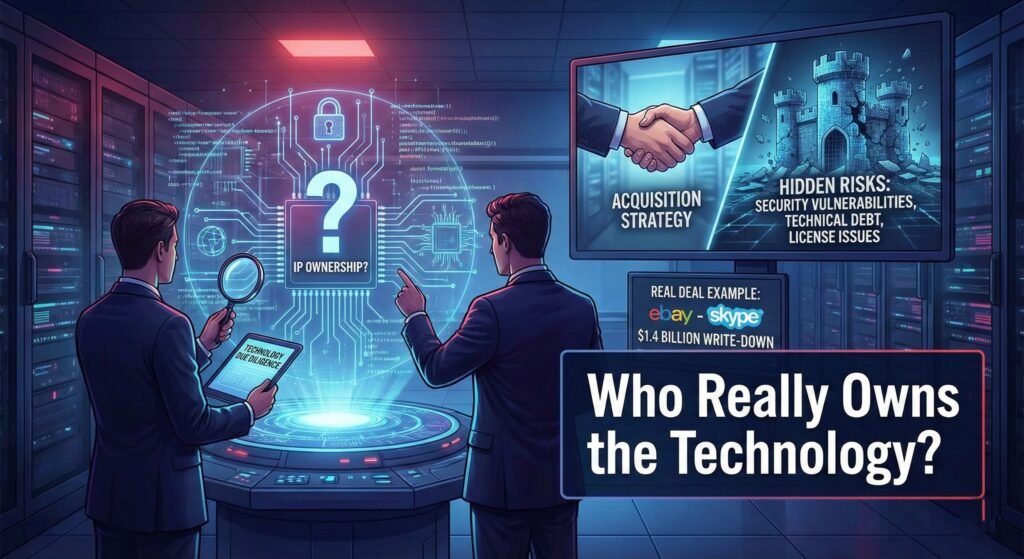
Technology Due Diligence: Who Really Owns the Technology?

What This Means: Technology due diligence is the comprehensive evaluation of a target company’s technology assets, including software architecture, intellectual property, development capabilities, security systems, and scalability potential. This process assesses code quality, technical debt, cybersecurity vulnerabilities, and patent portfolios. The Challenge: Technology due diligence must uncover invisible risks: Can the code handle 10x growth? Are there unpatched security vulnerabilities? Is the codebase dependent on outdated frameworks or single developers? Does the company actually own its IP, or is it built on improperly licensed open-source code? These questions determine whether you’re buying an asset or a liability. Why It Matters: Technology problems are expensive to discover late. Whether it’s IP ownership disputes, technical debt requiring complete rebuilds, or security vulnerabilities exposing the business to breaches, issues missed during due diligence are costly to resolve and can derail the entire acquisition strategy. Real Deal Example: Hidden technical issues can derail entire acquisitions. When eBay bought Skype for $2.6 billion in 2005, due diligence missed that Skype didn’t own critical peer-to-peer technology (“Global Index”) that powered its core calling functionality – it was licensed from Joltid, a separate company owned by Skype’s founders. Joltid sued eBay over licensing of the peer-to-peer technology that Skype used to distribute calls. eBay failed to identify that core technology was licensed, not owned. The licensing terms weren’t properly secured. This was discoverable during due diligence but was missed or inadequately addressed. Combined with broader strategic failures, eBay took a $1.4 billion write-down in 2007 and sold its majority stake just four years later, having learned an expensive lesson: verifying technology ownership is foundational to successful integration. Framework Available: If you’d like to explore technology due diligence frameworks that catch these critical ownership issues, we can discuss how they apply to different deal types and industries.

Deal Strategy

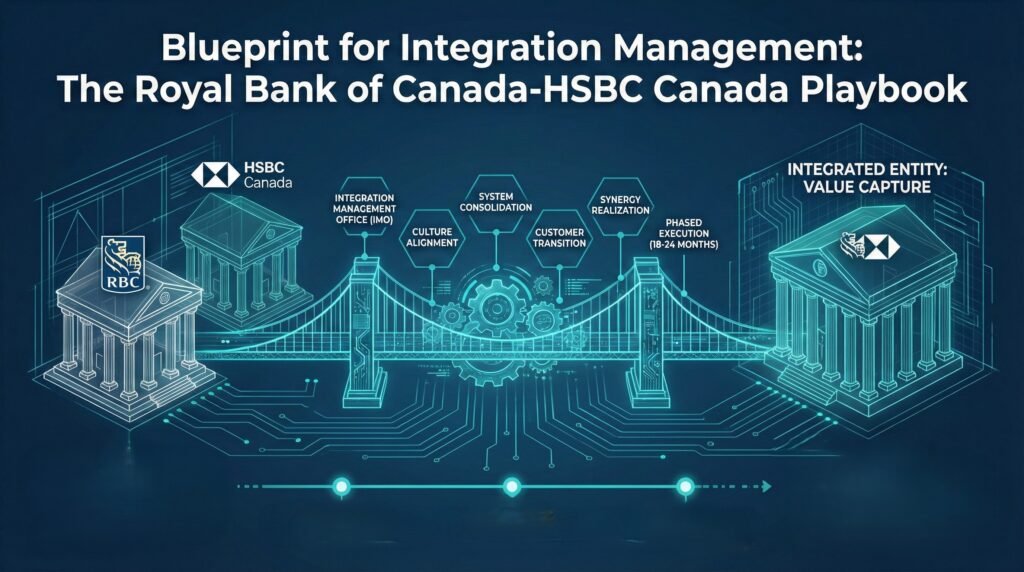
Blueprint for Integration Management: The Royal Bank of Canada-HSBC Canada Playbook

What This Means: Integration management involves the systematic combination of two organizations’ operations, cultures, systems, and strategies to achieve acquisition objectives. This includes establishing an Integration Management Office (IMO), designing organizational structures, aligning cultures, consolidating systems, and optimizing performance toward synergy realization. The Challenge: While acquirers dedicate significant resources to due diligence, insufficient planning for integration often creates a gap between deal rationale and value capture—turning promising transactions into stalled transformations. Why It Matters: Studies consistently show that 50–70% of acquisitions fail to meet their objectives, largely due to weak integration design and insufficient post-deal governance. Effective integration management is therefore the critical determinant of acquisition success. Real Deal Example: On March 28, 2024, Royal Bank of Canada (RBC) completed its acquisition of HSBC Bank Canada (HSBC) in an all-cash $13.5 billion deal, marking one of Canada’s largest bank acquisitions in history. The integration is being managed through dedicated teams focused on seamless customer transition, system consolidation, and employee integration involving approximately 4,500 HSBC employees and over 800,000 customers. RBC assembled a comprehensive legal and operational team covering M&A, retail and commercial banking, compliance, and technology to oversee the complex transition. The integration is being executed in phases over 18-24 months, with branch conversions (in April 2024) and system/technical migrations (in November 2024) carefully sequenced to minimize customer disruption. The transaction received regulatory approval with conditions designed to maintain competitive dynamics in the Canadian banking market. The acquisition strengthens RBC’s domestic market presence while delivering anticipated strategic and operational synergies. The deal positioned RBC to expand its client base, enrich its product suite, and accelerate growth in competitive banking sectors, demonstrating robust integration management and value capture in a complex, large-scale financial services transaction. Connect & Share: Connect with us to share insights from your own deals – learning from real-world execution accelerates collective mastery of M&A integration management.  

AI Tools Spotlight

Perplexity’s Comet, The AI Browser, Is Now FREE

Perplexity’s Comet browser, once an exclusive beta for Max subscribers, became free for all users recently in October, 2025. More than another AI add-on, Comet reimagines how people interact with the web—turning browsing into intelligent action. What The Tool Does?: Beyond simple queries, Comet lets users request practical tasks—comparing products, organizing research, or drafting summaries—using natural language prompts. Its integrated tools such as Discover (personalized recommendations) and Spaces (project organization) streamline workflows for professionals managing large information volumes. Key Features: Unlike traditional browsers that simply display information, Comet’s built-in sidecar assistant actively engages with what you view. It answers questions, summarizes content, and navigates web pages—all in real time and without switching tabs. Testers report that it works across platforms like social media, YouTube, and Google Docs. Comet also comes preloaded with Perplexity’s AI search engine, which delivers direct, cited answers instead of lists of links. The result removes the repetitive search‑click‑read cycle of standard browsing. Why It Matters?: Comet is already available on Windows, macOS, and Linux systems, with mobile versions on the way. Its performance shows what’s possible when search and action blend into a single experience. Whether the world is ready for an autonomous browser—and whether it should be—is the debate just beginning.

Scroll to Top