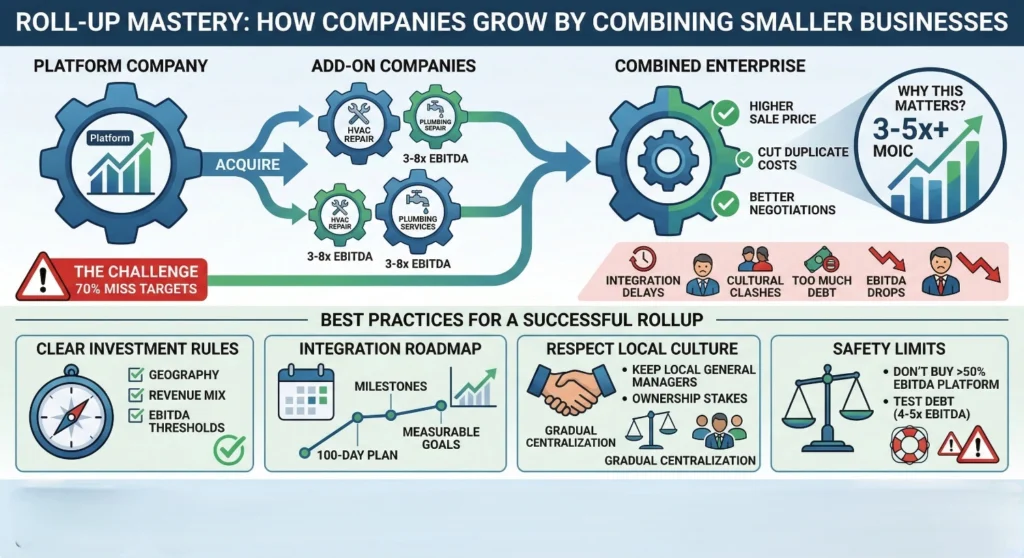
A “roll-up” (also called “buy-and-build”) is when an investment firm buys one main company, then adds several smaller companies to it. They target fragmented industries (ones with many small players) like HVAC repair or plumbing services. The strategy works because:
- Smaller companies sell for lower prices (3-8x of EBITDA)
- The combined larger company can sell for a higher price
- Combined companies can negotiate better deals and cut duplicate costs
The Challenge: About 70% of these consolidations miss their targets. Common problems include:
- Integration delays (combining systems, processes, and people takes longer than expected)
- Cultural clashes (different companies have different ways of working)
- Taking on too much debt to fund acquisitions
- EBITDA often drops after deals close without proper management
Why This Matters?: When done well, these strategies can deliver 3-5x+ MOIC (Multiple on Invested Capital—how many times you get back what you invested) through:
- Improved EBITDA margins (from 10% to 15% in HVAC/services)
- Higher sale price for the larger combined company
- In the HVAC industry specifically, private equity / investment firms now account for 23% of deals (2024), up from just 8% in 2023
Best Practices for a Successful Rollup:
- Clear Investment Rules: Define exactly what you’re looking for (geography, revenue mix like 60%+ recurring contracts, EBITDA thresholds) before your first acquisition. Be disciplined—reject opportunities that don’t fit
- Integration Roadmap: Build a 100-day plan with specific milestones and measurable goals for cost savings and revenue growth. Track progress monthly
- Respect Local Culture: Keep local general managers who know their markets and customers. Give them ownership stakes. Centralize back-office functions gradually—start with financial consolidation first, then harmonize operations over several months as stability is achieved
- Safety Limits: Don’t buy a company bigger than 50% of your platform’s EBITDA. Test whether your debt level (4-5x EBITDA) can handle economic downturns
Real life Example: Morgan Stanley Capital Partners acquired Sila Services (a Pennsylvania-based residential HVAC company) in 2021. Over the subsequent 3.5 years, they built Sila into a platform operating over 30 brands across the Northeast, Mid-Atlantic, and Midwest regions through a combination of add-on acquisitions and operational improvements. In late 2024, they agreed to sell the company to Goldman Sachs Alternatives. While specific financial terms weren’t publicly disclosed, the transaction demonstrates how disciplined roll-ups can create significant value in fragmented service industries.
Share Your Experience: Building a roll-up? We’d like to hear about your integration successes and challenges.