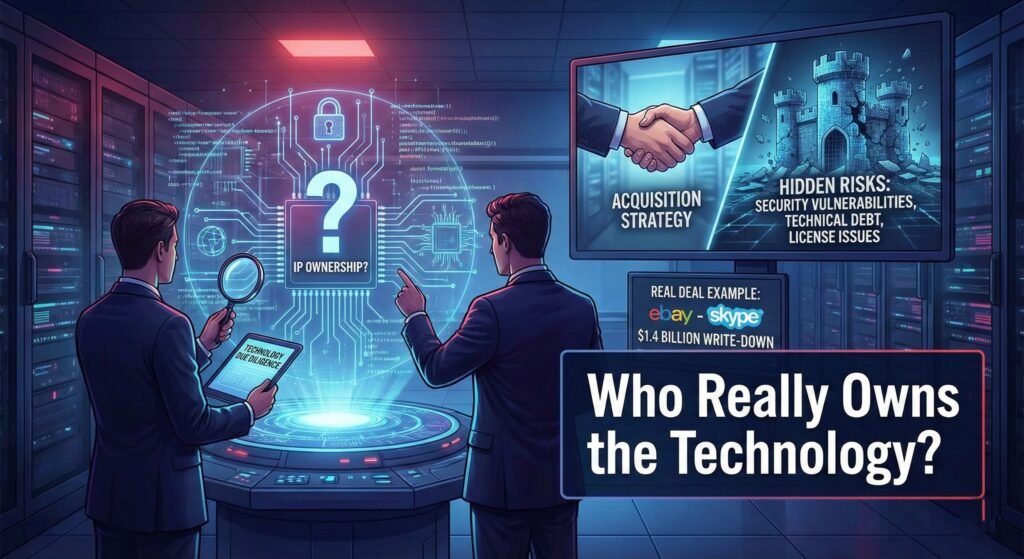
What This Means: Technology due diligence is the comprehensive evaluation of a target company’s technology assets, including software architecture, intellectual property, development capabilities, security systems, and scalability potential. This process assesses code quality, technical debt, cybersecurity vulnerabilities, and patent portfolios.
The Challenge: Technology due diligence must uncover invisible risks: Can the code handle 10x growth? Are there unpatched security vulnerabilities? Is the codebase dependent on outdated frameworks or single developers? Does the company actually own its IP, or is it built on improperly licensed open-source code? These questions determine whether you’re buying an asset or a liability.
Why It Matters: Technology problems are expensive to discover late. Whether it’s IP ownership disputes, technical debt requiring complete rebuilds, or security vulnerabilities exposing the business to breaches, issues missed during due diligence are costly to resolve and can derail the entire acquisition strategy.
Real Deal Example: Hidden technical issues can derail entire acquisitions. When eBay bought Skype for $2.6 billion in 2005, due diligence missed that Skype didn’t own critical peer-to-peer technology (“Global Index”) that powered its core calling functionality – it was licensed from Joltid, a separate company owned by Skype’s founders. Joltid sued eBay over licensing of the peer-to-peer technology that Skype used to distribute calls. eBay failed to identify that core technology was licensed, not owned. The licensing terms weren’t properly secured. This was discoverable during due diligence but was missed or inadequately addressed. Combined with broader strategic failures, eBay took a $1.4 billion write-down in 2007 and sold its majority stake just four years later, having learned an expensive lesson: verifying technology ownership is foundational to successful integration.
Framework Available: If you’d like to explore technology due diligence frameworks that catch these critical ownership issues, we can discuss how they apply to different deal types and industries.