KSMC

Author name: admin

Global Pulse

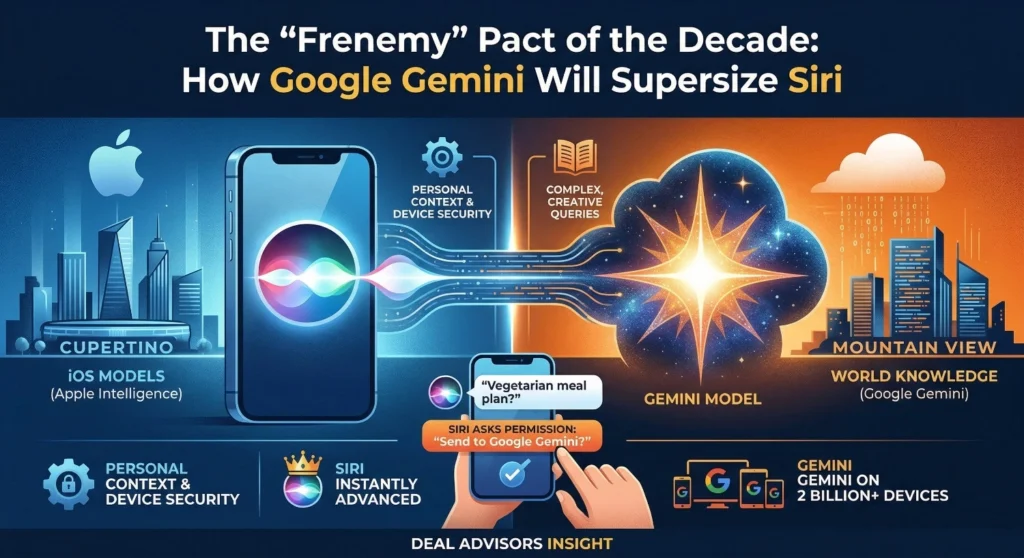
The ‘Frenemy’ Pact of the Decade: How Google Gemini Will Supersize Siri

For nearly two decades, Apple and Google have fought a bitter war for supremacy in mobile technology. But the immense pressure of the Generative AI arms race has forced an unthinkable truce. In a move that has fundamentally reshaped the mobile landscape, Apple has announced a partnership with Google to integrate the powerful Gemini model into iOS, macOS, and iPadOS, finally giving Siri the “brain transplant” it desperately needed. The Two Tier ‘Brain’ Coming To Your iPhone Why This Matters? The Bottom Line The smartphone landscape continues to evolve rapidly as the AI era takes hold. In this new reality, even the fiercest rivals have realized that collaboration may be the best way to keep pace with rapid technological change. Your iPhone is still designed in Cupertino, but its best new ideas will soon be powered by Mountain View.

Deal Strategy

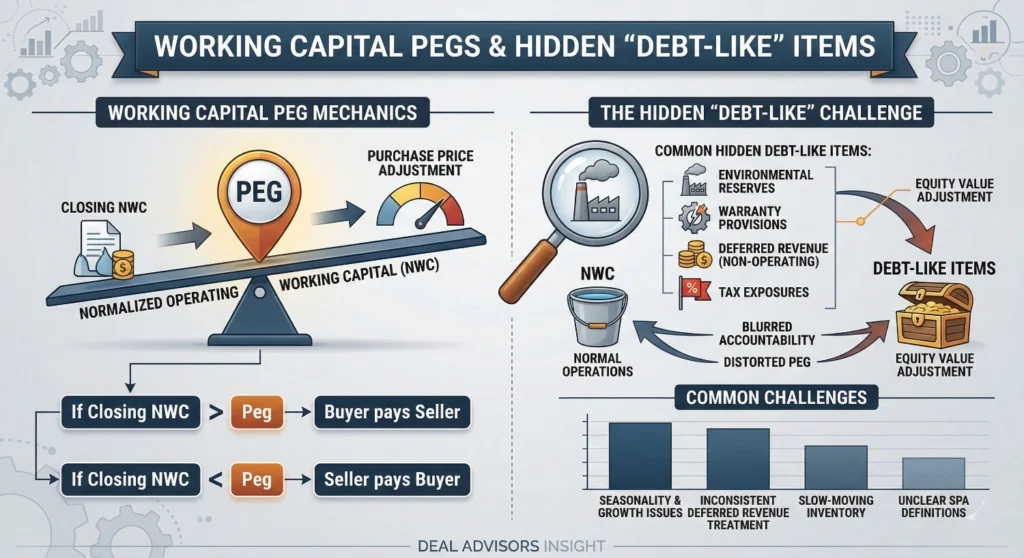
Working Capital Pegs and Hidden “Debt‑Like” Items

In our last issue, we covered Quality of Earnings (QoE), including a Net Working Capital example. This issue dives deeper into working capital pegs and debt-like purchase price adjustments. What This Means: Net Working Capital (NWC) is a negotiated lever that directly influences purchase price through the working capital peg. The peg represents the normalized level of operating working capital a business needs, and is negotiated during the due diligence exercise using the most recent 12–24 months average to strip out seasonality and unusual items. Closing NWC is measured as of closing date using preliminary estimates, with final true-up adjustment 60-120 days post-close. In a cash‑free, debt‑free deal, NWC is usually defined as current assets (excluding cash) minus current liabilities (excluding debt and agreed debt‑like items), and deviations from the peg at closing drive dollar‑for‑dollar price adjustments.​ In summary, If closing NWC < peg, seller pays buyer (decreases purchase price). If closing NWC > peg, buyer pays seller (increases purchase price). The complexity lies in deciding what belongs in “operating” working capital versus what should be treated as debt‑like. Long‑dated or non‑operating obligations—such as environmental reserves, large warranty provisions, certain deferred revenue, or tax exposures—often behave more like debt in economic terms. If they remain inside working capital, they can distort the peg and blur accountability for future cash outflows; if reclassified as debt‑like, they reduce equity value or are settled by the seller outside the peg. Common Challenges: Real Deal Context: One of our clients acquired an industrial manufacturing company in a cash-free, debt-free transaction where the target carried historical environmental exposure and longer-term product warranties. During our due diligence, we identified sizeable environmental and warranty reserves in “accrued liabilities”—treated as current liabilities and included in historical NWC. Management noted these obligations would resolve over years but argued they were part of normal operations and embedded in historical financials. The buyer pushed to reclassify them as debt-like items for the EV-to-equity bridge. The parties agreed to: This preserved buyer protection and seller economics without renegotiating headline value. Suggested Success Factors: Share Your Perspectives: Have you encountered a situation where reclassifying an item between NWC and debt‑like materially changed the deal economics? How did you resolve it?

AI Tools Spotlight

Taplio

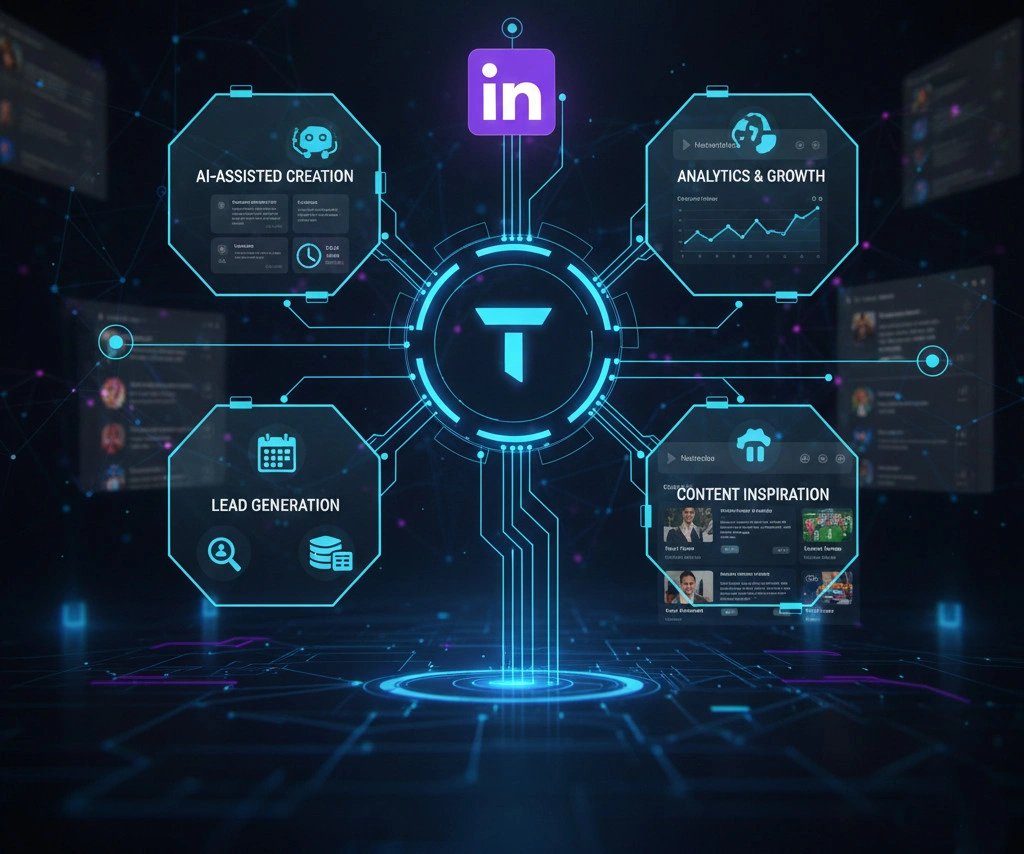
Taplio is an AI-powered LinkedIn growth and content creation platform designed for professionals, entrepreneurs, and businesses looking to build their personal brand and expand their network. The tool combines content generation, scheduling, analytics, and engagement automation into a single platform. What The Tool Does? Why It Matters?: LinkedIn remains the primary platform for B2B relationship building, yet most professionals struggle with consistent, high-quality content creation due to time constraints. In an industry where relationships drive deals and trust is currency, tools like Taplio enable professionals to maintain consistent thought leadership without sacrificing billable hours or deal execution focus. Explore the tool here.

Global Pulse

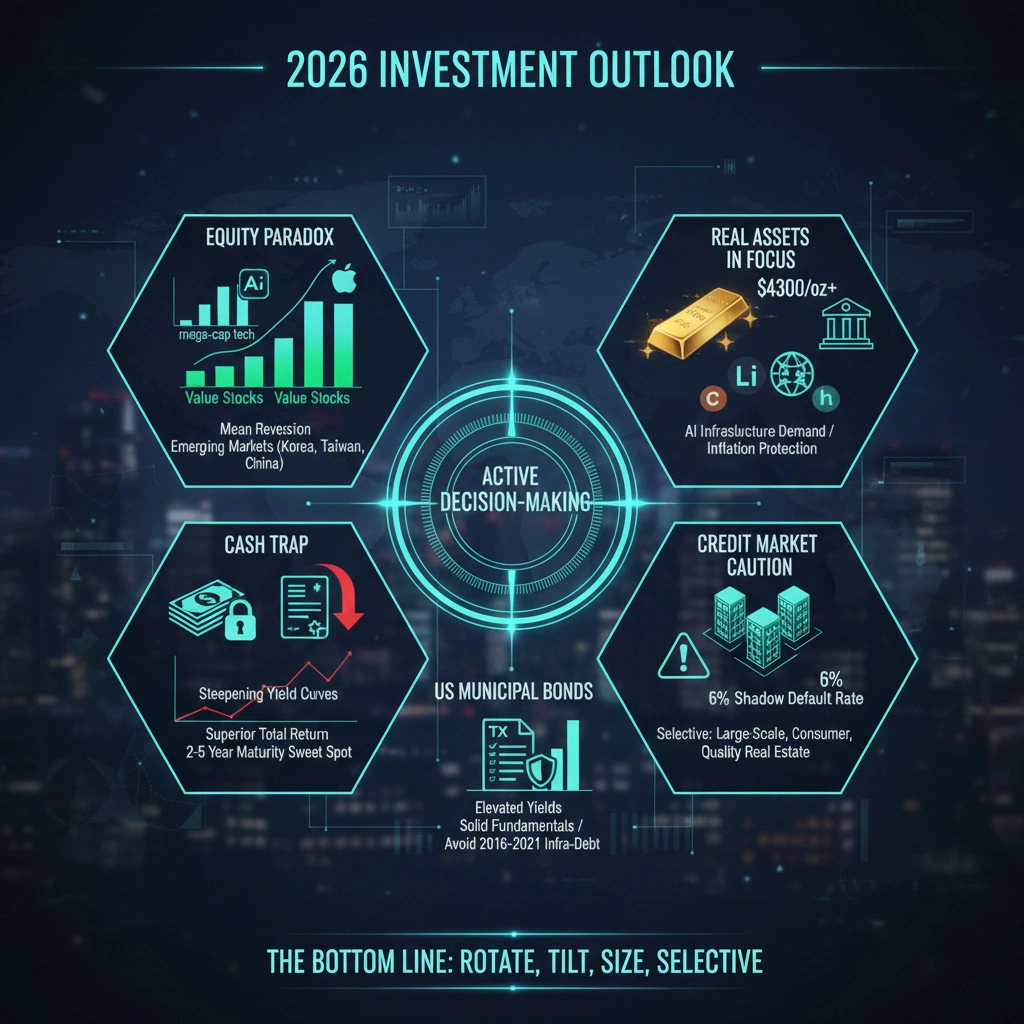
2026 Investment Outlook: An Year Demanding Active Decision-Making

As markets close out 2025 near record highs, the path forward demands selectivity. We cover actionable takeaways accross various asset classes below. The Equity Paradox U.S. equities trade at historical valuation extremes, concentrated in mega-cap tech stocks increasingly funding AI infrastructure through circular debt arrangements. Yet value stocks remain attractively priced versus historical averages, suggesting mean reversion potential as Fed rate cuts support broader growth. Emerging markets like Korea, Taiwan, and China offer tech exposure at compelling discounts. The Cash Trap Money market assets remain elevated despite declining yields as the Fed cuts rates. With yield curves steepening, bonds offer superior total return potential. The 2-5 year maturity sweet spot provides attractive income with capital appreciation upside, while global diversification across UK, Australia, and select emerging markets enhances risk-adjusted returns. Real Assets in Focus Gold has surged past $4,300/oz as central banks accumulate reserves faster than Treasuries, driven by geopolitical hedging and dollar diversification following the 2022 Russian asset seizure. While momentum has pushed prices beyond fundamentals, structural support remains intact. Broad commodity allocations capture AI infrastructure demand for copper, lithium, and energy while providing inflation protection. Credit Market Caution Despite tight credit spreads, stress signals are emerging in private lending markets. Investment funds focused on corporate loans are trading at 10% discounts to their underlying asset values, while struggling borrowers increasingly pay debt with more debt—pushing US shadow default rates to 6% from 2% in 2021. Opportunities remain in large-scale financings, consumer credit, and quality real estate lending. US Municipal Bond Opportunity US municipal bonds offer strong value for taxpayers, combining elevated yields with solid fundamentals backed by healthy state and local government balance sheets. These tax-advantaged bonds are positioned as top risk-adjusted opportunities for 2026. However, selectivity matters: avoid over-leveraged infrastructure projects from 2016-2021, and instead target private placement bonds offering investment-grade quality at attractive yields. The Bottom Line 2026 is expected to reward active management over passive positioning. Rotate from cash to quality bonds, tilt toward undervalued equities, size real assets carefully, and stay selective in credit.

Deal Strategy

Quality of Earnings in M&A

What This Means: Quality of Earnings (QoE) is a critical due diligence exercise that goes beyond the numbers in financial statements to assess the true, sustainable profitability of a business. Unlike a standard audit that verifies historical accuracy, a QoE analysis examines whether reported earnings reflect the ongoing operational reality and identifies adjustments needed for a normalized view of performance. QoE reports have become essential tools for buyers, lenders, and investors. They uncover accounting irregularities, one-time items, aggressive revenue recognition, and hidden risks that could materially impact valuation and deal structure. Common Challenges: Real Deal Context: We recently advised a private equity firm acquiring a Pennsylvania based Document Management Software company. The QoE exercise involved extensive negotiations around the Target Net Working Capital (NWC Peg), with particular focus on deferred revenue treatment. Our analysis examined the cost-to-serve existing customer contracts against collected revenues to ensure the negotiated peg would provide the buyer with adequate post-closing liquidity and operational flexibility. We continued our engagement post-close to validate the final working capital settlement against the target. The NWC Peg (Target Net Working Capital) is a negotiated benchmark—typically based on historical averages—that represents the expected working capital level a business needs to operate normally. At closing, the actual working capital is measured against this peg: if it’s lower, the buyer receives a dollar-for-dollar purchase price reduction; if higher, the buyer pays more. This mechanism protects buyers from inheriting a business that’s been stripped of operating cash while ensuring sellers aren’t penalized for maintaining healthy working capital levels. Suggested Success Factors: Informative Content: In a recent video podcast, I explored the nuances of Quality of Earnings, essential deal considerations, the evolving role of AI in deal execution, and more. Watch the full discussion here. Share Your Perspectives: Quality of Earnings analysis is the foundation of informed deal-making, protecting value and building trust between parties. Have you encountered significant QoE findings that reshaped a transaction? We would be interested to know how you addressed the issues and moved forward.

AI Tools Spotlight

Payhawk: AI-Enabled Spend Management

Payhawk is a spend-management platform for mid-market and enterprise finance teams operating across multiple entities. It combines corporate cards, accounts payable, expense management and real-time spend controls in one system, with AI-powered automation to improve visibility and compliance. What The Tool Does? Why It Matters?: For mid-market companies or PE-backed groups, fragmented spend data can slow financial oversight after growth or acquisitions. Payhawk helps reduce manual reporting and spreadsheet-based consolidation by giving finance teams faster, standardized visibility into group-wide spend—supporting stronger cost control and scalable financial governance across multiple entities. Explore the tool here.

Global Pulse

Will 2026 Deliver the Biggest M&A Deal Ever?

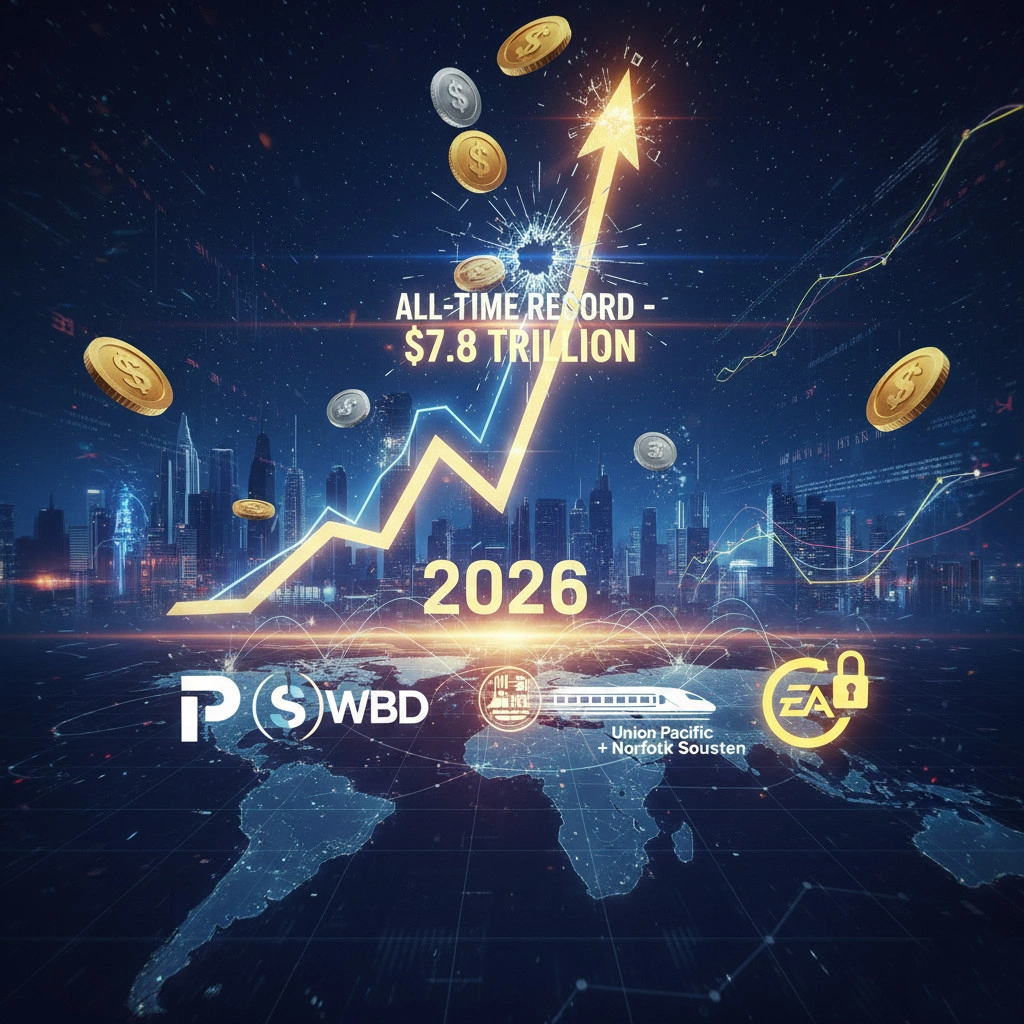
While the number of mergers and acquisitions has slowed in 2025, the size of headline transactions is skyrocketing, and 2026 could be the year mega‑deals break records. Global M&A activity reached about $4 trillion by November 2025 — more than 40% higher than last year’s pace, despite fewer deals overall. Some blockbuster transactions have already made headlines: What’s fueling the boom? Dealmakers point to a mix of: Regulatory hurdles remain — antitrust scrutiny and trade policies could influence outcomes — but analysts are already predicting record-breaking transactions in 2026. Forecasts suggest global M&A volume could climb toward $7.8 trillion by 2027, and Breakingviews hints at mega-consolidations across tech, telecom, and financial services. If Reuters’ take is anything to go by, the next year could deliver a deal that rewrites the M&A record books. But, as always in the world of mega-deals, only time will tell if this becomes a reality.

Deal Strategy

Deal Jumping & Topping Bids in M&A

What This Means: “Deal jumping” occurs when a new bidder makes a competing offer after a deal is announced or signed, presenting a higher or better-structured proposal. This can force boards, sponsors, and strategic buyers to reassess the deal, their fiduciary duties, and protections in place. In mid-market deals, these situations are less common than in large-cap transactions, but they do happen — especially when deal protections are lighter, financing is accessible, and a competitor sees strategic opportunity. Common Challenges:  Real Deal Context: Occidental Petroleum vs. Chevron / Anadarko (2019): Suggested Success Factors: Share Your Perspectives: Deal jumping and topping bids are high-stakes maneuvers requiring strategy, foresight, and solid legal guidance. Have you been on either side of a topping bid? We would be interested to know how you navigated through the challenges?

AI Tools Spotlight

Kira: AI-Powered Contract Reviews

Kira is an AI contract review software from Litera that uses patented machine learning to identify, extract, and analyze content in contracts and documents, helping legal teams work faster and more accurately than ever before. Moreover, Kira’s architecture is specifically designed with legal confidentiality requirements in mind. What The Tool Does? Why It Matters?: Kira empowers legal professionals to focus on what they do best—strategic analysis and client counsel—by eliminating manual document review. Explore the tool here.

Global Pulse

Cybersecurity M&A Heats Up as Giants Strengthen AI Capabilities

November 2025 saw significant consolidation in the cybersecurity sector, with major players making strategic acquisitions to bolster their AI-powered security offerings. Key Deals: What’s Driving Activity The convergence of AI and cybersecurity is creating urgency among strategic acquirers. Companies need AI-native security solutions to defend against increasingly sophisticated threats. Mid-Market Impact For mid-market cybersecurity firms, the message is clear: AI capabilities are now table stakes for attracting strategic interest. Companies with proprietary AI/ML models for threat detection command premium valuations. Read the full roundup at Infosecurity Magazine.

Scroll to Top